The Price of Progress is Someone Else's Suffering
🎙 Listen to the audio version
The Iran war is costing $2 billion a day, and that number is designed to feel unreal
I was listening to a Search Engine podcast episode called “The Cost of War” when the guest, a woman called Linda Bilmes, said something that made me go down a rabbit hole.
Bilmes is a public finance researcher at Harvard Kennedy School, and she has spent years studying what wars actually cost: operations, equipment, veterans’ care, interest on debt, the works. In her piece, “The Ghost Budget,” she explains how much work the US government does to hide how much it really costs to go to war.
Her claim about the current war in Iran is that it’s costing roughly $2 billion a day, and she is certain the total will clear $1 trillion, with a realistic range she puts at $3 to $5 trillion once you count everything that comes after the bombs stop falling. Tomahawk missiles are valued at $2 million on a DoD balance sheet, but replacing one costs $3.5 million. Patriot interceptors listed at $1 to $2 million cost $4 to $5 million to restock.
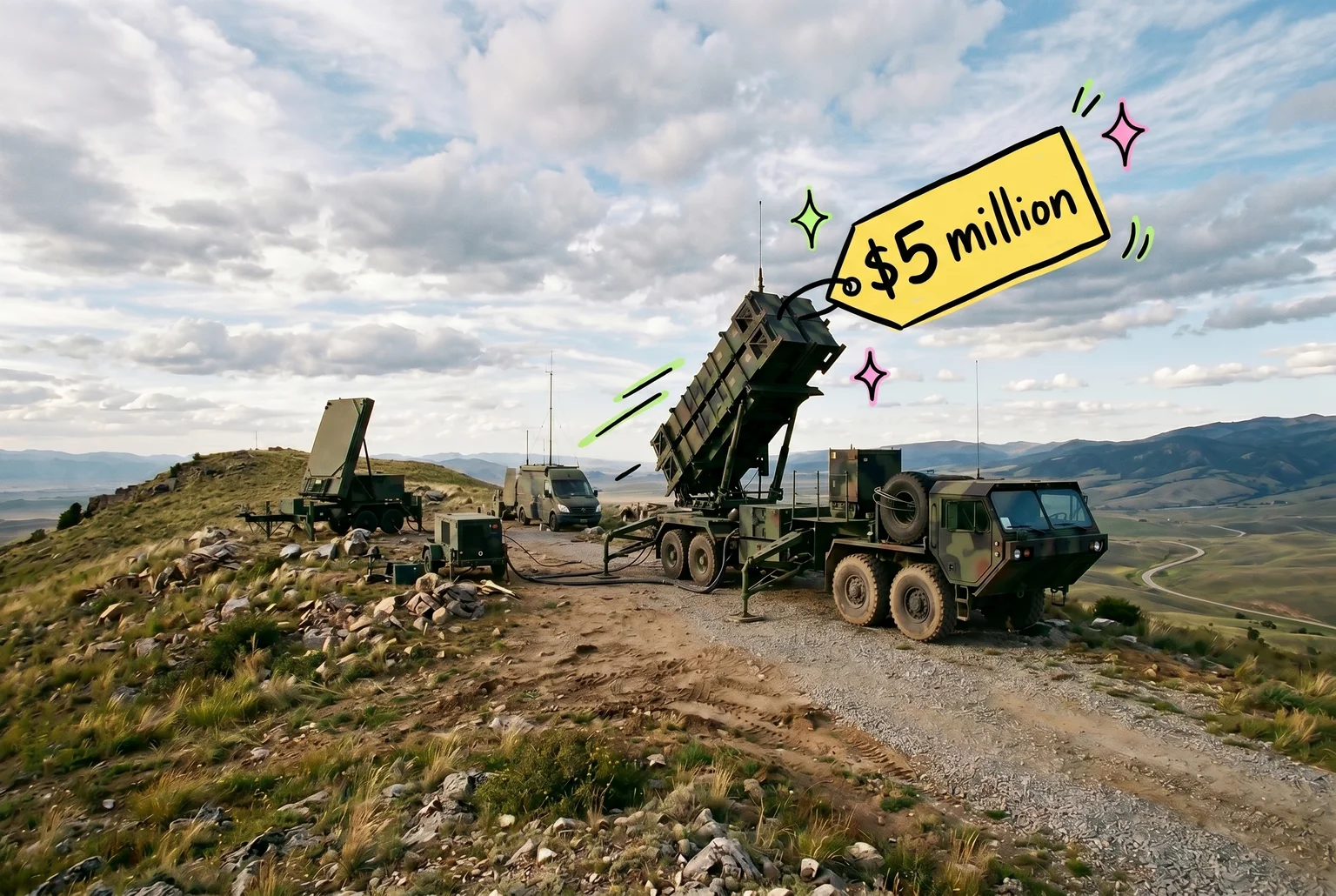
Yet, the American taxpayer doesn’t directly feel the pain of paying for new tomahawks, because the money is not coming out of their pockets. The government just puts it all on a credit card.
After 9/11, the United States changed the way it pays for war. Previous major conflicts had been financed at least partly through tax increases, which meant citizens felt something in their wallets and had concrete reasons to ask whether the war was worth it. The post-9/11 wars were financed almost entirely through debt, adding roughly $1.3 trillion to the national debt, about $4,000 per person, while taxes were cut simultaneously. The two moves together produced a war that felt, to most Americans paying bills and buying groceries, like it cost nothing. The Bush-era tax cuts added an estimated $1.5 trillion to the debt over a decade, running in parallel with war spending so that the fiscal pain was scrambled into background noise. You couldn’t easily point to a line on your pay stub and say: that is the war.
This is not a conspiracy. It’s an incentive that politicians responded to.
When you pay for a war through taxes, voters are more likely to oppose it. When you pay through debt, the cost lands on people who cannot yet vote, in amounts too vague to trigger outrage, at a delay long enough that no one in office at the time will be held responsible.
“Putting war on the credit card” essentially removes the friction of the democratic process.
Bilmes’ argument is: if people knew what this actually costs, they would push back harder, and some of that pushback would prevent useless wars.
That argument is correct and important. But the financial cost is one kind of cost. There is another kind.
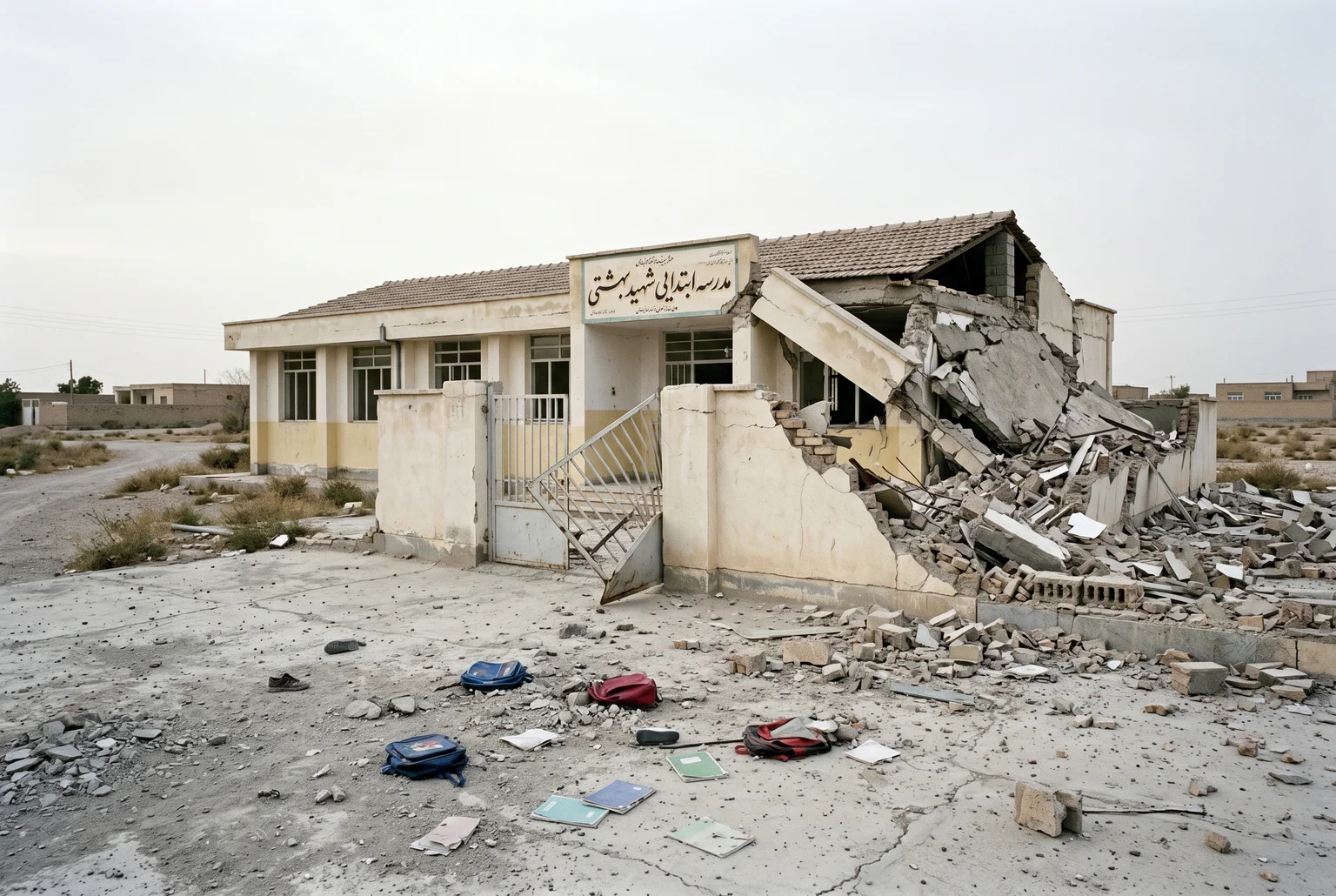
On February 28, 2026, the first day of the war, a U.S. airstrike hit Shajareh Tayyebeh Elementary School in Minab, a city in southern Iran. Amnesty International’s Evidence Lab investigated using satellite imagery, video footage, witness accounts, and physical evidence from the scene, including missile remnants consistent with a U.S. Tomahawk. Their finding: 168 people killed. More than 100 of them were children.
That is what $2 billion a day looks like when it lands.
I am not writing that to shock and move on. I am writing it because the financial architecture Bilmes describes and the school in Minab are not separate topics. They are the same topic.
You’ll see what I mean.
Everything around you has been paid with human suffering
Start with the most recent World Cup.
Between 2010, when Qatar was awarded the tournament, and 2020, more than 6,500 migrant workers from India, Pakistan, Nepal, Bangladesh, and Sri Lanka died in Qatar. The number comes from embassy data, not from Qatar. Qatar’s official death count for World Cup stadium construction was 37.
Workers arrived in 45-degree heat, had their passports confiscated, worked shifts they couldn’t refuse, and when their hearts gave out, the cause of death was listed as natural. FIFA earned approximately $7.5 billion from that tournament. Workers’ families received nothing. Billions of people watched Argentina beat France in one of the best finals in the sport’s history, and the atmosphere was electric, and Messi finally got his trophy, and it was genuinely wonderful to watch.
The people who bore the cost, the people who decided the cost was acceptable, and the people who celebrated in their living rooms were three entirely different groups who never had to look at each other.
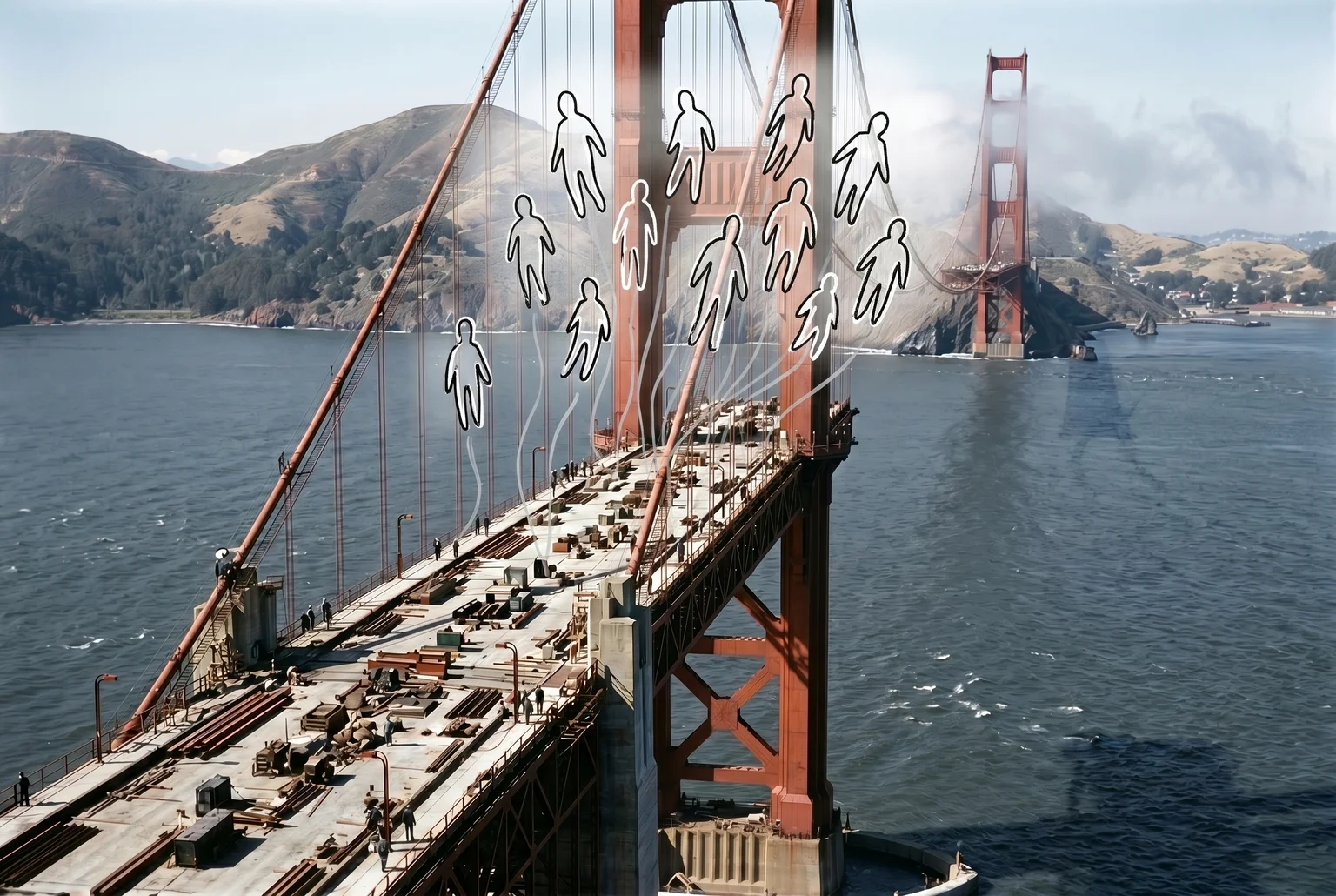
Now cross the Golden Gate Bridge. It was built between 1933 and 1937, and “only” eleven workers died during construction. By the standards of major infrastructure projects in that era, this was considered a safety record worth noting.
Nobody crossing it today thinks about the eleven people.
People died, the bridge was built, and the suffering was absorbed so completely into the background of ordinary life that it effectively ceased to exist. Every morning, commuters drive across it while listening to podcasts. Tourists stop in the middle to take selfies. The suffering that purchased the structure has been compressed into a historical footnote so small it doesn’t register. This isn’t a moral failure by any individual crossing the bridge. It’s the mechanism. It is how progress actually works, which makes it interesting and uncomfortable at the same time.
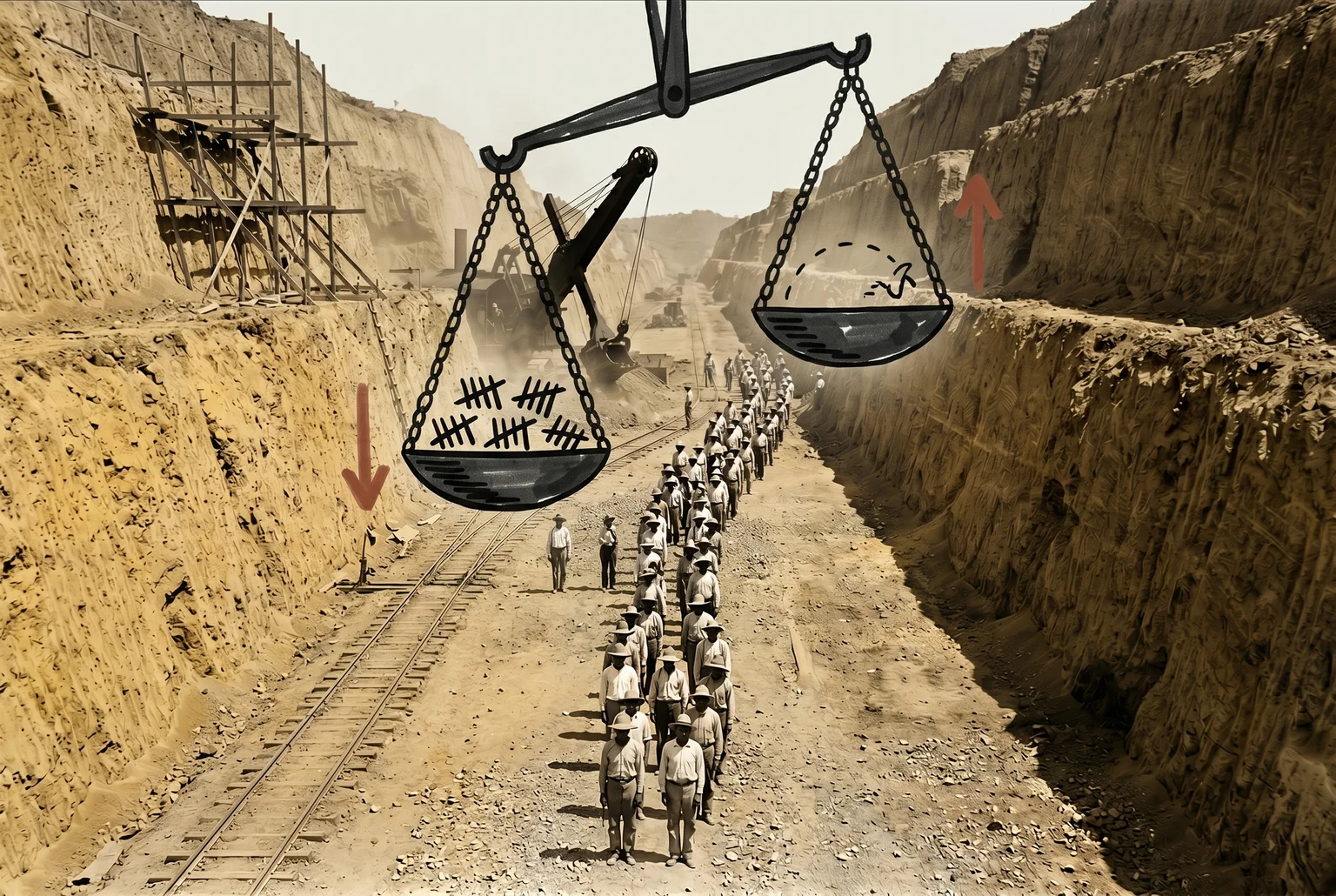
Go further back. During the American construction of the Panama Canal between 1904 and 1914, roughly 5,600 workers died, mostly from disease, and the majority of those deaths fell on Caribbean laborers from Barbados and other West Indian islands. Some people frame it as a triumph of engineering for Panama’s benefit. But Panama did not control the canal. The United States did for almost a century, until December 31, 1999. The people who died building it were not Panamanian nationals trading suffering for national infrastructure. They were Caribbean laborers who died building an asset that a foreign government would operate for nearly a century. The suffering and the benefit were distributed across entirely different groups across entirely different generations.
Pull back even further and the pattern just keeps repeating. British children as young as four and six were working twelve to sixteen hour shifts in mills and mines before the 1833 Factory Act imposed the first real limits. Chinese laborers built the western half of the Transcontinental Railroad under conditions that killed thousands, their deaths so poorly documented that the total remains disputed.
The Industrial Revolution, the infrastructure that unified a continent, the stadiums where the world’s best player finally won the thing he worked his whole career to win. All of it purchased with suffering that was real, was known, and was decided by people who would not be doing the suffering.
This is not an aberration. It is a pattern.
Would you let people suffer for the greater good?
Now consider Fritz Haber. He invented the Haber-Bosch process, which takes nitrogen from the air and converts it into synthetic ammonia. This single discovery made modern agriculture possible at scale. Estimates vary, but the process is plausibly responsible for feeding roughly half the people alive today, somewhere in the range of three to four billion people who exist because nitrogen fertilizer exists. He also pioneered chemical warfare in the First World War, personally supervising the first large-scale chlorine gas attacks at Ypres in 1915, which killed thousands of soldiers in the trenches.
If you could press a button that gives humanity synthetic nitrogen fertilizer, knowing that the same button would also cause people to die horrible deaths, suffocated in the mud of Belgium, do you press it?
The question has never been whether progress costs suffering. It does. It always has. The question is whose suffering, how much, and who decided it was acceptable.
How much suffering is “worth it”?
Hiding the cost of doing unpopular, and sometimes plain awful, things is how powerful people get away with doing them. The suffering gets absorbed, the forgetting is instantaneous, and the people who decided the cost was acceptable were never the people who actually suffered.
But if doing those unpopular, sometimes plain awful, things results in outcomes that are undeniably worth having, then hiding the cost isn’t just politically convenient. It’s probably necessary.
That’s the problem.
Bilmes’ case is: make the cost visible, restore the democratic friction, and citizens and Congress can decide whether the war is worth it. Transparency as corrective. Opacity as weapon.
This sound right from a moral perspective. And then I think about the Panama Canal.
Roosevelt didn’t submit the canal decision to voting. Instead, he said “damn the law, I want the canal,” supported a Panamanian separatist revolt after Colombia rejected a treaty, centralized authority under George Goethals, and moved fast before organized opposition could form. Tens of thousands of workers died.
Now here is the question: if those deaths had been reported in real time, prominently, as they accumulated, with names and home villages and photographs, visible to American voters and members of Congress as the numbers climbed past ten thousand and then twenty thousand; would the canal have been built?
Probably not.
And if not, is that unambiguously a good outcome?
The deaths were real, the suffering was real, the distribution of benefit was grotesquely unequal, and no one got to vote on whether the thousands of deaths were an acceptable price. On every moral axis I can think to apply, hiding this was wrong.
But the canal also reorganized global trade, connected oceans, and generated benefits that compounded for over a century. The world is probably better with the Panama canal than without it.
This is where we get stuck.
The assumption behind Bilmes’ argument is that people, given the real cost, will make better decisions. For wars, this is probably right. The benefits of Iraq and Afghanistan were always vague and distant. The costs fell on soldiers, their families, the poor, and future taxpayers who never voted for the bill. When you make that cost visible, the case for the war collapses. Transparency works there.
That logic doesn’t apply cleanly to big, expensive, and dangerous infrastructure projects. The benefits of the Panama Canal, or a transcontinental railroad, or a national power grid arrive decades later and spread across millions of people who never knew they were waiting for them. Informed people wouldn’t make better decisions in these cases. They would just make decisions that protect people they can see, at the expense of people who don’t exist yet. Full transparency, in those cases, might just produce decisions that feel morally correct while being, in practical terms, worse.
I know how this sounds. It is the same argument every powerful person making a self-serving decision behind closed doors has always made.
Which is precisely the problem.
So here is where we land: who has the right to decide that someone else’s suffering is an acceptable price for something that person will never benefit from? And on what basis can that decision be made without it being, at some level, just the powerful people doing whatever they want?
There’s no clean answer. But there are 4 camps of people who think their answer is the right one:
- The Witness Camp
- The Power Camp
- The Realist Camp
- The Progress Camp
The Witness Camp: “The only honest response to a pile of wreckage is to look at it”
The Witness position is simple: you are obligated to look. Not because looking fixes anything. Not because documentation leads to justice. But because choosing not to look is still a choice. And it is a choice that benefits the people who hid the cost in the first place.
Walter Benjamin made this argument in 1940, in the ninth of his “Theses on the Philosophy of History,” and he made it through an image. He owned Paul Klee’s 1920 drawing Angelus Novus, a figure that looks less like a traditional angel and more like something frozen mid-alarm, eyes wide, mouth open, wings spread.
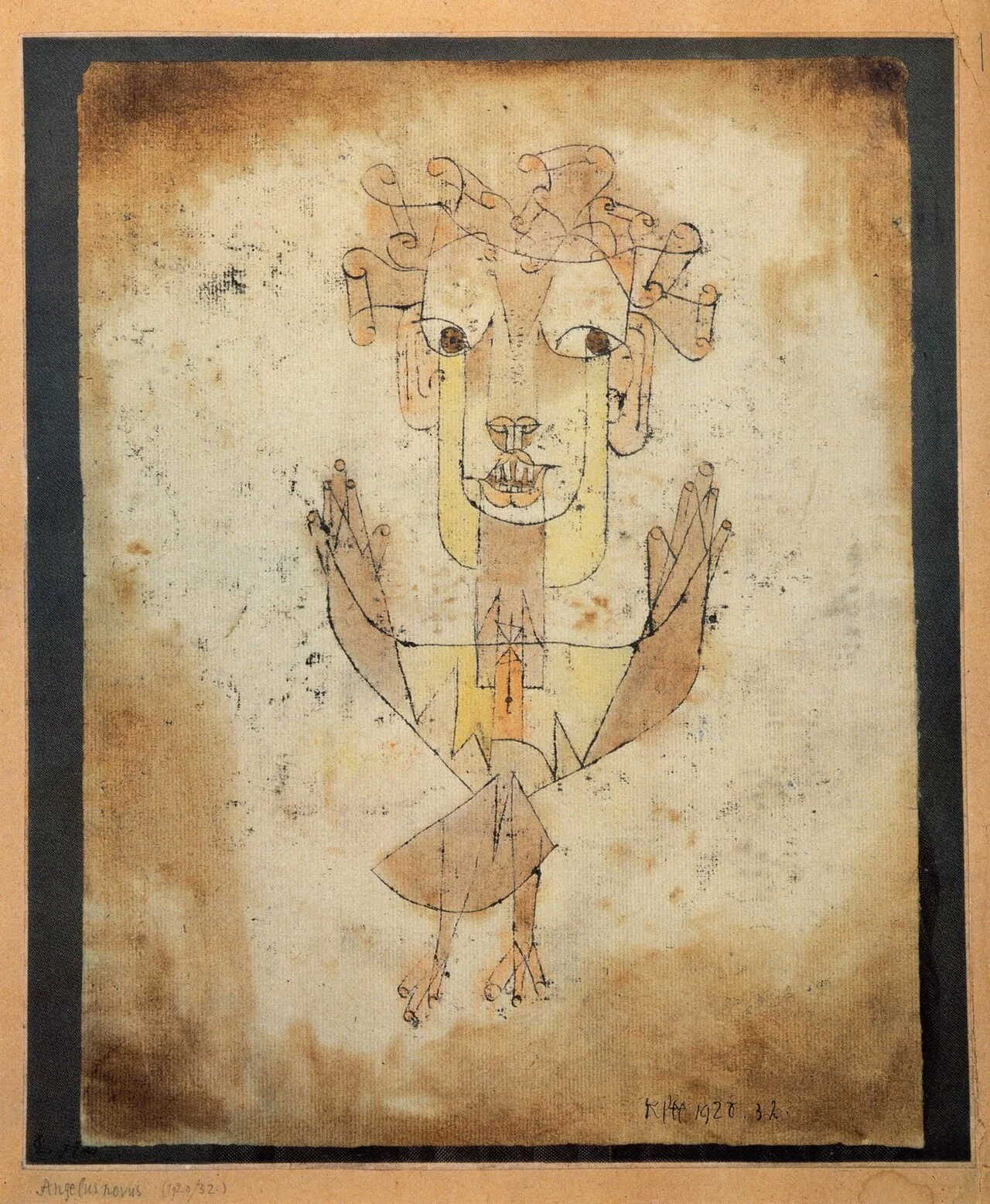
Benjamin looked at this drawing and saw the angel of history.
The angel, he wrote, faces the past. Where we see a sequence of events, it sees one single catastrophe, wreckage piling up endlessly at its feet. It would like to stop. To wake the dead. To put back together what has been broken. But a storm is blowing in from paradise, catching its wings so violently it cannot close them. The storm drives the angel backward into the future, while the wreckage keeps building. That storm, Benjamin writes, is what we call progress.
The point is not that progress is bad or that history is just tragedy. The point is that progress and destruction are not separate things. They are the same thing, seen from two different angles.
The Witness says: the angel’s obligation is to face that, to refuse to look away, even while the storm carries it helplessly into the future.
But I think witnessing is not enough.
There’s a short story titled “The Ones Who Walk Away from Omelas” about a beautiful city called Omelas. Its people are happy, genuinely, richly happy, and the city is full of music and festivals and real human joy. But for all of that to exist, there must be a single child, locked in a basement, sitting in its own filth, malnourished, occasionally kicked by one of the citizens who comes to look. Every person in Omelas knows about the child. They are told when they are old enough to understand, and most of them are troubled by it for a while, and then they come to terms with it, because the alternative is the collapse of everything that makes Omelas work.
Most people stay. They absorb the knowledge and continue living.
But some people, a few, cannot. After seeing the child, they walk away from Omelas alone, into the dark, into an unknown place that the author refuses to describe. The story does not tell you this is the right choice. It does not tell you the child is saved or that Omelas collapses or that anything at all improves as a result of their leaving. This is not a story about redemption. This is a story about the weight of knowing.
The Hiroshima and Nagasaki bombings are the best examples of the flaw of the Witness camp.
Yoshito Matsushige was a photographer in Hiroshima when the bomb dropped on August 6, 1945. His account describes scenes so extreme that he could barely force himself to press the shutter. His photos are one of the few taken in the immediate aftermath, and they show human suffering in a register that is hard to look at directly. Survivors, the hibakusha, testified in detail about what they saw and felt and lost, their accounts documented in collections across decades. John Hersey published Hiroshima in 1946, an entire issue of the New Yorker given over to six survivors’ stories, and it was read by millions. Later photographers including Dōmon Ken and Tōmatsu Shōmei produced bodies of work on the aftermath that entered the permanent record of the 20th century.
By December 1945, an estimated 140,000 people had died in Hiroshima and approximately 74,000 in Nagasaki. The suffering was documented in extraordinary detail. The world witnessed.
But there were no consequences and no accountability.
No U.S. political or military leader was tried. Nobody was charged. The Truman administration defended the decision, and the legal and political architecture of the postwar order was constructed entirely by the winning side, which had no incentive to subject its own choices to accountability. The witnessing happened, completely, and it changed nothing structurally.
That is the flaw of the Witness position.
Being a witness is better than ignoring the problem, but it’s also the easy way out if you want to sort of feel better about yourself. You read about something, you talk about it with friends, your feel troubled by it, and then go about your day.
It’s a form of “grief tourism”: the moral experience of confronting suffering, without the structural consequence that would make the confrontation cost anything. The angel faces the wreckage. The storm blows it forward anyway. The Witness camp is right that looking is an obligation. It is wrong to imply that looking is enough.
The Power Camp: “The suffering you can’t count doesn’t count”
The Witness camp assumes opacity is accidental. That the wreckage is not quantified because counting is hard. That assumption lets the people responsible off the hook.
Power camp people are Witness camp people who also brought a calculator.
The people in the Power camp, think that those responsible for the suffering, aka those in power, are hiding it on purpose. And their best weapon to expose them is a spreadsheet.
In James C. Scott’s Seeing Like a State, he argues that states don’t just fail to see certain things. They build systems that make certain things impossible to see, because counting them would make large projects politically impossible or morally unacceptable. He calls this legibility: the state’s drive to turn complex, messy, local reality into clean numbers that can be taxed, drafted, and controlled. What gets left out of the official record isn’t an accident. The record was built to leave it out.
His example is 18th-century scientific forestry: German states reduced entire forest ecosystems to a single metric, the yield of marketable timber.
Everything else, the understory, the soil microbiome, the mosses, the animals, the ways local communities used the forest, ceased to exist in the administrative record. The only thing that mattered was timber, and everything it was beyond timber became, officially, nothing. The first generation of monoculture forests looked like a triumph. The second generation began dying, because the things that weren’t being counted were also the things that kept the forest alive.
That pattern, measuring what serves the project and erasing what complicates it, is how power hides things, in every era, at every scale.
Which brings me to Ukraine and Kazakhstan, 1929 to 1933.
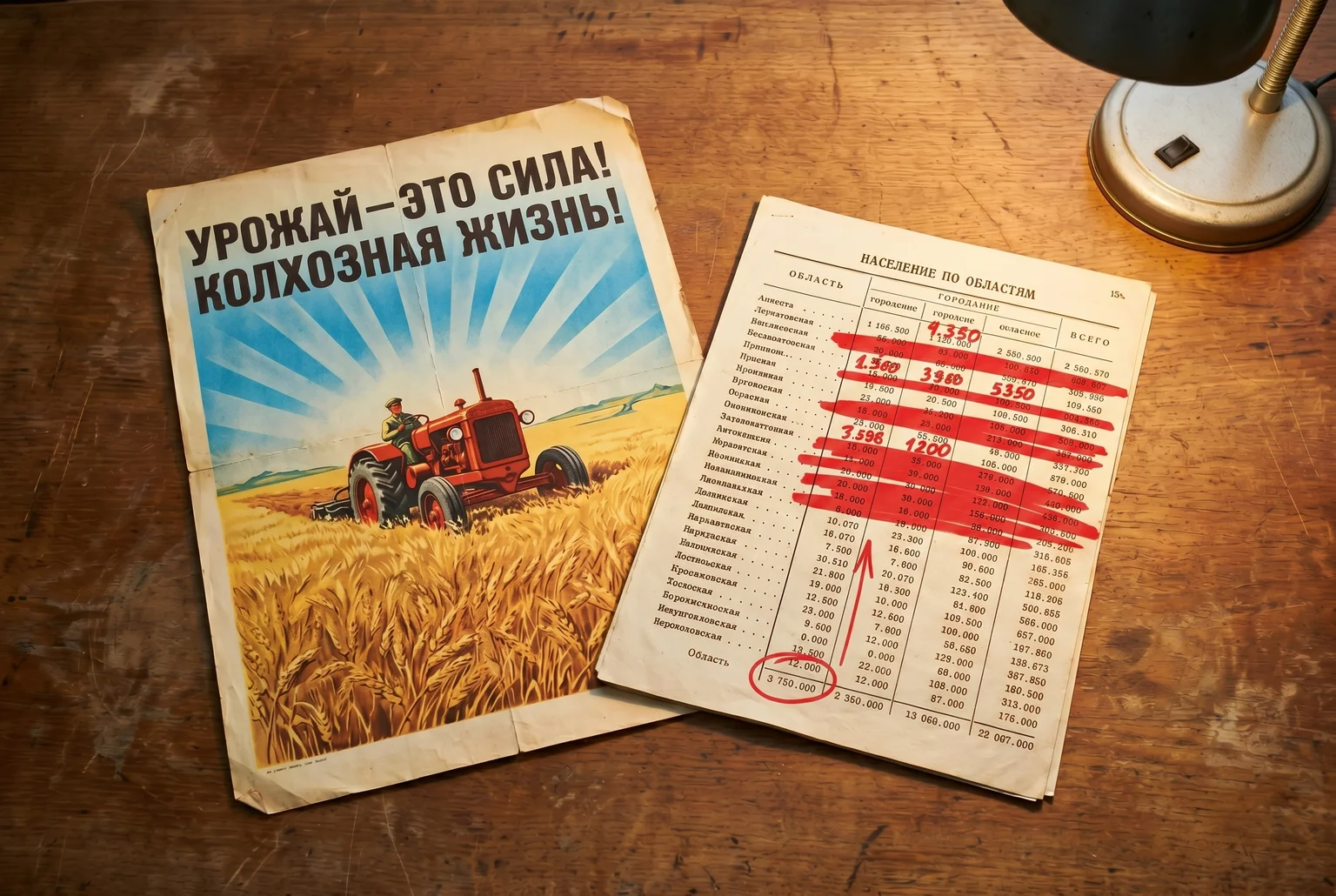
Soviet collectivization was one of the most thoroughly manufactured instances of illegibility in modern history. In the late 1920s, Stalin’s government decided that the Soviet Union needed to industrialize fast, and that the way to pay for it was to seize food from the countryside. Peasant farmers were forced off their own land, which was folded into large state-controlled farms. The grain they grew was taken and sold abroad, or sent to feed factory workers in the cities. When the harvests came up short and people began starving, the state did not acknowledge famine. It blamed the peasants themselves, specifically, a class of supposedly wealthy farmers it called kulaks, who were accused of hoarding and sabotage. Local officials who reported the deaths accurately were prosecuted. The 1937 census, which would have made the demographic catastrophe visible in cold official numbers, was suppressed; the demographers who conducted it were arrested.
Estimates for Ukraine alone range from 3.5 to 5 million dead. In Kazakhstan, the Kazakh famine killed somewhere between 1.3 and 2.3 million people, dropping the population from approximately 3.6 million in 1926 to 2.2 million in 1937. That gap is visible in census data now. It was made invisible then, deliberately, at every level of the administrative chain.
This is not a historical anomaly. The mechanism is the same one from the Qatar World Cup: 6,500 documented deaths among migrant workers, and an official Qatari death count of 37. That gap is not a mistake in calculations, it’s a measurement choice. The state recorded what served the project and left the rest outside the ledger.
And then there the Search Engine podcast episode from the beginning of this post. Debt financing a war rather than taxing for it is the American version of this tool. Not gulags and suppressed census data, but bond markets and ten-year projections. The mechanism is softer, and the violence is remote. But the effect is the same: the true cost is made invisible to the people who would, if they could see it, be most likely to object. The suffering stays off the spreadsheet.
The Power camp insists on naming this. Opacity is not unavoidable. It is manufactured, maintained, and it serves specific interests. Exposing that machinery is not optional political activism. It is the necessary for any honest accounting.
The Power camp’s approach is probably better than the Witness camp’s. Opening up a spreadsheet and actually counting the dead and quantifying the suffering is better than just looking at them and feeling bad that it happened. But naming the machinery does not dismantle it.
And there is a version of this thinking that becomes a trap: if every hidden cost is someone’s deliberate plan, you stop being able to tell the difference between a cover-up and a gap that is simply hard to close. You risk ending up with a tinfoil hat. Not every discrepancy between official and actual death tolls is a Soviet-style erasure. Some costs are genuinely difficult to count.
The Power camp is right that manufactured illegibility is real, that it is not accidental, and that it should be treated as a political act rather than an accounting limitation.It is insufficient because naming the system that hides costs does not tell you how to fight it when the people running that system are also the ones who decide what gets counted, what gets published, and what gets ignored.
The Realist Camp: “You can’t be trusted with this knowledge”
Here is the argument I find hardest to dismiss, and I want to give it its full force before I say anything against it.
People are bad at accepting suffering now in exchange for vague, uncertain benefit later. It’s the same reason why people eat more than they should or avoid exercise.
This is not a cynicism. It’s been found time and time again in behavioral economics and public choice research. We discount future benefits not simply because we are impatient, but because we don’t trust that the payoff will actually arrive. Politicians on two- and four-year cycles avoid policies whose costs are visible now and whose benefits land twenty years later.
This means that if you required voting before every large project, including a full accounting of who would suffer, how much, and the odds of the payoff materializing, a significant number of those projects would not survive the vote.
Realists think you can’t be trusted with doing what’s right for society in the long term.
A good example of this is the Manhattan Project, which was run under near-total secrecy. Its full purpose was known to a handful of people. Congress was not formally briefed. Large portions of the workforce did not know what they were building. Communities were displaced with minimal notice to make room for the project’s three main sites: Oak Ridge in Tennessee, where roughly 3,000 families were removed from approximately 60,000 acres; Hanford in Washington; Los Alamos in New Mexico. Workers were exposed to radiation without informed consent. And then the bombs were used, and somewhere between 130,000 and 200,000 people died in Hiroshima and Nagasaki, almost all of them civilians, in two days.
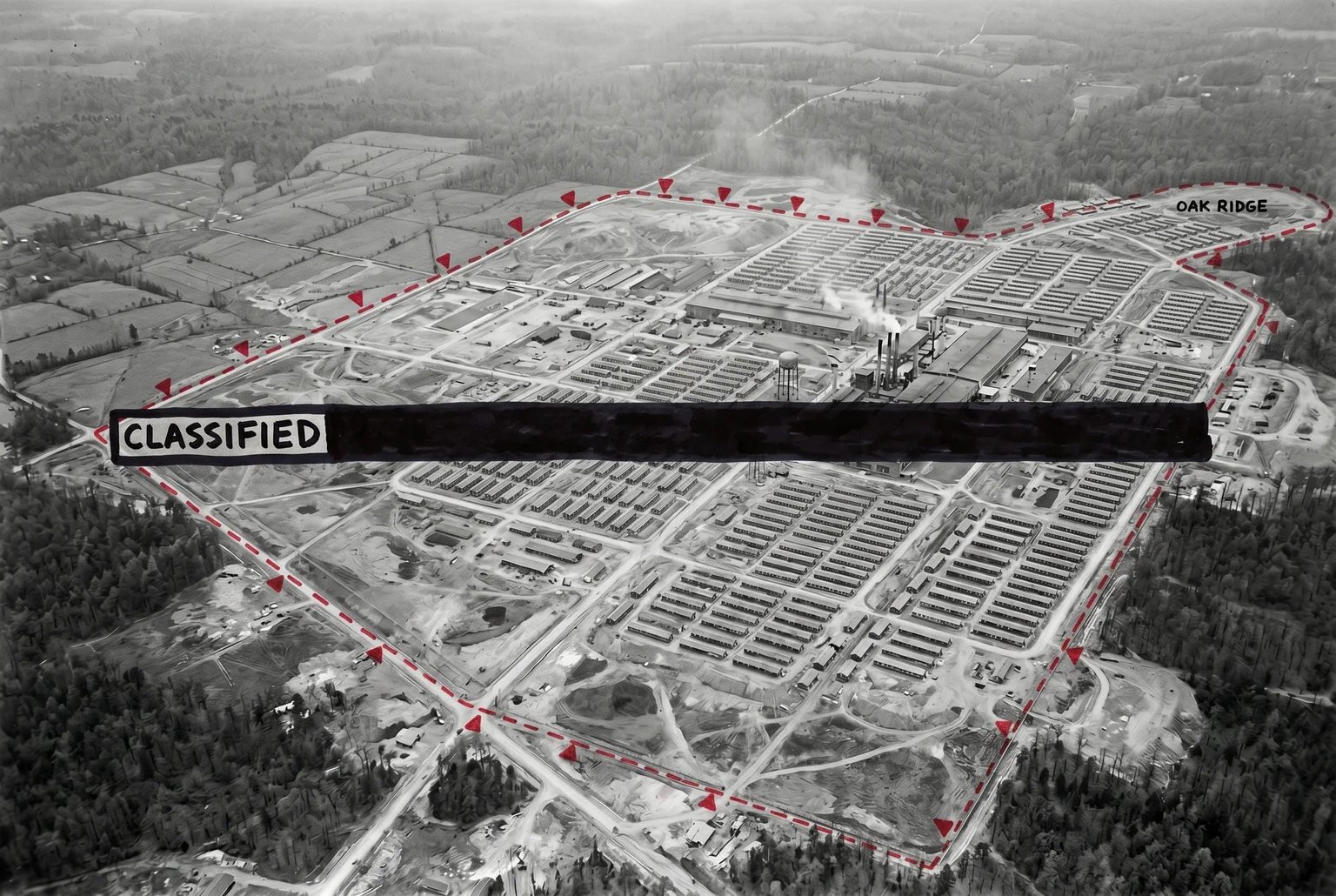
None of this was put to a vote. Not the displacement. Not the radiation exposure. Not the bombs. The people who made these decisions made them quickly, secretly, and under the logic that the alternative, a land invasion of Japan, would cost more lives. You can dispute that logic. But the Realist does not need you to accept it. The Realist only needs you to accept the prior condition: that if the full project had been shared with the American public in 1942, with all its costs itemized, the public’s reaction would have been unpredictable at best and obstructive at worst. And so it wasn’t shared.
The project happened. The war ended. The nuclear deterrence framework that followed shaped the next eighty years of geopolitics in ways no democratic referendum could have anticipated or priced.
The Realist looks at that sequence and says: you cannot always afford to ask.
This is genuinely difficult to argue with, and I think anyone who dismisses it too quickly is not taking the problem of human shortsightedness seriously enough. Democratic deliberation is not a magic oracle that produces correct answers about long-horizon collective goods. Sometimes it produces paralysis. Sometimes it produces the wrong answer. The cost of requiring full transparency and full consent before every major project is that some genuinely important things do not get done.
But here is what the Realist argument costs you the moment you accept it.
You have just handed every future powerful person a blank check. Once you grant that opacity is sometimes the necessary precondition for progress, you have granted that the people in charge get to decide when this is one of those times. And they will always find a reason. The Manhattan Project’s secrecy becomes the model for the next secret project, and the one after that, and the one whose costs turn out not to have been worth it but which followed exactly the same internal logic. There is no stopping point. The blank check doesn’t come with an expiration date.
That is what makes the Realist camp genuinely dangerous. The insight is real. The implication is that whoever holds power also holds the authority to decide when your suffering is the price that needs to stay hidden, and they will never tell you they’ve decided that until after the fact, if at all.
The Progress Camp: “History has always had a plan for you, personally, and it does not care if you suffer”
There is something seductive about the idea that suffering is not waste. That it is, instead, fuel.
The nineteenth-century German philosopher Georg Hegel created the framework for the Progress camp. His big idea, the one he called the cunning of reason, goes like this: history is always moving somewhere. Not randomly, but toward something. Toward more freedom, more rationality, a better human civilization. History also does not ask you to participate. It just uses you. Your ambitions, your conflicts, your wars, your greed. History takes all of that raw human mess and turns it into fuel. You think you are chasing your own goals. You are not. You are an instrument. And when history is done with you, it discards you. The individuals who drove the process may have suffered, may have died, may have caused enormous harm. That is not history’s problem. That was always the plan.
This sounds like abstract philosophy until you actually look at a few examples:
- Feudal lords crushed peasants for centuries. That brutal extraction concentrated enough wealth and power to eventually create the conditions for early capitalism.
- Factory owners in the 1800s worked people to the bone, children included. That exploitation generated the contradictions that made industrial society both possible and eventually intolerable, which in turn created the pressure for labor rights, democratic reform, and the modern welfare state.
- European colonial powers stole wealth from entire continents. That stolen surplus funded the universities, the scientific institutions, the infrastructure that built modern Western civilization.
At every single step, someone suffers. And something larger grows out of it. The pattern is consistent enough, and ugly enough, that it demands more than just “bad people did bad things.” Something structural is going on.
Marx took Hegel’s idea and made it less mystical. Forget Spirit and Reason and the march of history toward some metaphysical destination. Just look at who owns things and who doesn’t. The people who own factories and land and capital are always in tension with the people who work for them. That tension builds. It breaks. And when it breaks, it reshapes society. The suffering of workers under capitalism isn’t a bug, it’s the fuel. As Marx and Engels put it: “the history of all hitherto existing society is the history of class struggles.” The pain generates the consciousness. The consciousness generates the revolt. The revolt generates something new. Present suffering pays for future liberation. It’s more convincing than Hegel because it’s concrete: you can point to the factory, the paycheck, the eviction notice. And it gives suffering a direction: things are moving somewhere. The arc bends toward justice. The bending just costs exactly this.
Then came the Soviet state, which decided to prove the theory.
Stalinist industrialization was explicitly framed in Marxist-Hegelian terms. The kulaks, peasant farmers who had accumulated modest land and resources, were classified as a dying class. Their liquidation was not presented as murder. It was presented as historical necessity: the feudal mode of production giving way to socialist construction, the painful but rational step on the road to communism. Between 1929 and 1933, Soviet collectivization killed somewhere between five and eight million people across Ukraine and Kazakhstan through forced starvation, deportation, and labor camp death. The state did not invoke greed or cruelty as justification. It invoked history. It said: this is what progress costs. It said: these people are on the wrong side of the dialectic.
This is the Progress Camp’s position taken to its terminal logic.
The philosopher Theodor Adorno, writing in the aftermath of the Holocaust, gave the clearest answer to the Progress Camp: after Auschwitz, the idea that history’s atrocities serve a rational purpose is not just wrong, it is obscene. You cannot look at the death camps and say: necessary step ¯(ツ)/¯. You cannot look at the famine dead and say: the price of progress ¯(ツ)/¯. The moment you do, you have decided that the story of history matters more than the people inside it. And once you’ve decided that, you’ve handed every future bad guy the same excuse.
Hannah Arendt adds the part that should really keep you up at night. When she covered the trial of Adolf Eichmann, one of the key architects of the Nazi genocide, she expected to find a monster. She found a bureaucrat. Eichmann didn’t think of himself as a murderer. He thought he was doing his job inside a larger process he hadn’t designed and couldn’t stop. He had stopped asking whether what he was doing was right, and started asking only whether he was doing it correctly. He had, in Arendt’s framing, stopped thinking altogether. That is the Progress Camp’s logic taken to its human conclusion: a person so fully absorbed into the machinery of historical necessity that individual human lives had ceased to register as morally real.
This is the most forgiving camp and the most dangerous one. The Progress Camp does not justify atrocity by being crude. It justifies atrocity by being elegant. It takes the murderer’s hand and replaces it with History’s. It takes the victim’s name and replaces it with Necessary Cost. It launders moral responsibility into historical grammar, and the laundering is so thorough that the people doing it often genuinely cannot see the blood on their hands. That is not a bug in the framework. It is the framework working exactly as designed.
The people who decide are never the people who suffer
You could think of humanity as a body, and progress as the body’s search for survival and self-improvement.
Humanity moves the way a body moves: not by committee, not by vote, but by the aggregate pressure of millions of decisions no single person planned and no single person can reverse. No one decided the Panama Canal was worth 5,500 lives. The cells in the muscles of the body just moved. Capital accumulated. Engineers drew plans. Workers were shipped across oceans. The body does not consult its cells.
This framing is partially true. Diffuse agency is real. The impossibility of locating a single villain in a civilizational process is real. The Canal did not have an architect of suffering in a room deciding how many deaths was acceptable. It had a thousand people each doing their assigned piece, none of whom felt responsible for the whole.
That’s the Progress camp’s argument.
But Arendt’s point about Eichmann is precisely this: the “humanity is a body” metaphor is not a description of how power works. It is how power makes itself invisible. When a system is complex enough, and everyone is just doing their assigned job, no one feels responsible for what the system produces. Eichmann did not think of himself as a murderer. He thought of himself as a bureaucrat following instructions. The machine ran. People died. Nobody pulled the trigger and nobody felt like they had. Scaling that logic up to civilization does not make it more true. It makes it more dangerous.
So we need accountability. That’s what the Power camp argues.
Accountability is not an external imposition on the body. It is part of the body. Accountability is the immune system. The researchers counting bodies, the journalists publishing what governments classify, the tribunals that insist someone’s name goes on the order. These are not sentimental add-ons to progress. They are what keeps body from destroying itself.
Finally, the Realist camp argument is: immune systems can attack healthy tissue.
Full transparency applied to every major decision, given human short-termism and political dysfunction, can produce paralysis with its own body count. The bridge not built. The vaccine not approved. The intervention not made. That is a real cost.
The Realist is not wrong about this. The paralysis causes suffering too: the child who dies from a disease a delayed vaccine would have prevented, the city that floods because the seawall was too politically costly to approve, the bridge that never got built and so the ambulance arrived twelve minutes too late.
This is probably the only way to think about the question: “how much suffering is worth it?”
There’s no right number. It will probably always be more than was necessary. Definitely more than what would be considered acceptable. But lower than it would’ve been if there wasn’t any accountability.
The problem is that only one group has their hand on the “suffering” dial and it’s not you. The powerful always control the dial, and they will always set it in their favor. They will always find a reason why a particular cost needs to stay hidden and why a population’s suffering is the necessary price of this project.
Which means the framework we use to decide whose suffering is acceptable never follows what’s right. It follows who holds the power. The Caribbean laborers who died digging the Canal were not weighed against the shipping executives who profited. They were simply not in the room. The costs stayed hidden because hiding them served someone, and that someone had access to the dial.
That only changes if someone refuses to let it slide. The people controlling the dial are organized and powerful. The people paying the cost are scattered, voiceless, and often dead before anyone asks. The only thing that has ever pushed back, even a little, is someone who decided to keep count anyway. Not because they can fix it. Not because shining a light on something guarantees anything changes. But because the alternative is to go along with it: to do your job, follow the rules, and call that innocence. That’s exactly what Eichmann did.
If you read this far, you'll like what's next.
One essay a month, roughly. No noise, no sponsored content, no threads.