The Panda Is Not Your Friend
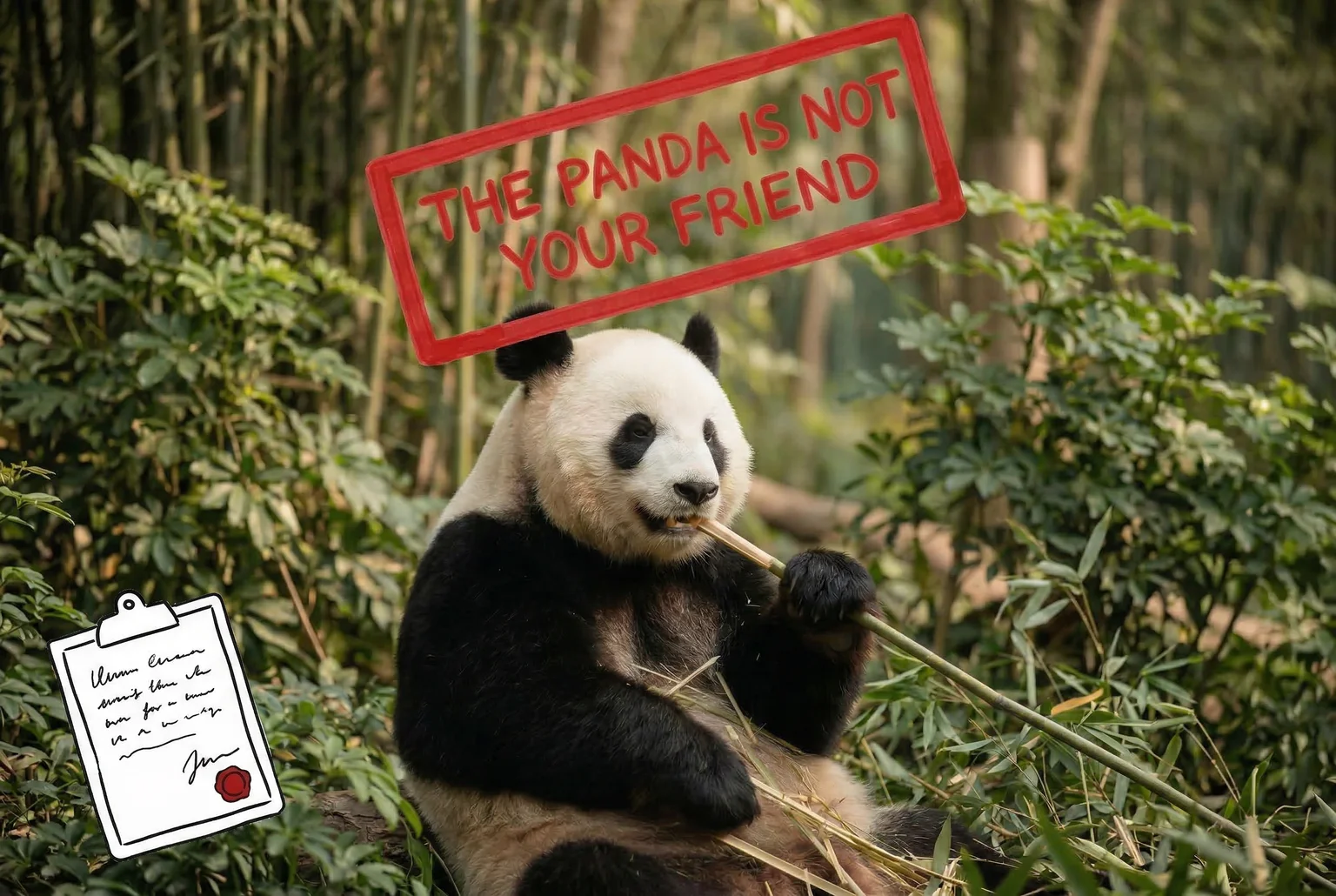
Pandas are the worst.
Right now, somewhere in a zoo, a giant panda is sitting in a pile of bamboo, eating approximately 40 pounds of it, achieving almost nothing, and looking profoundly pleased about this. It will do this for up to 16 hours today. It may also fall off something. There is footage.
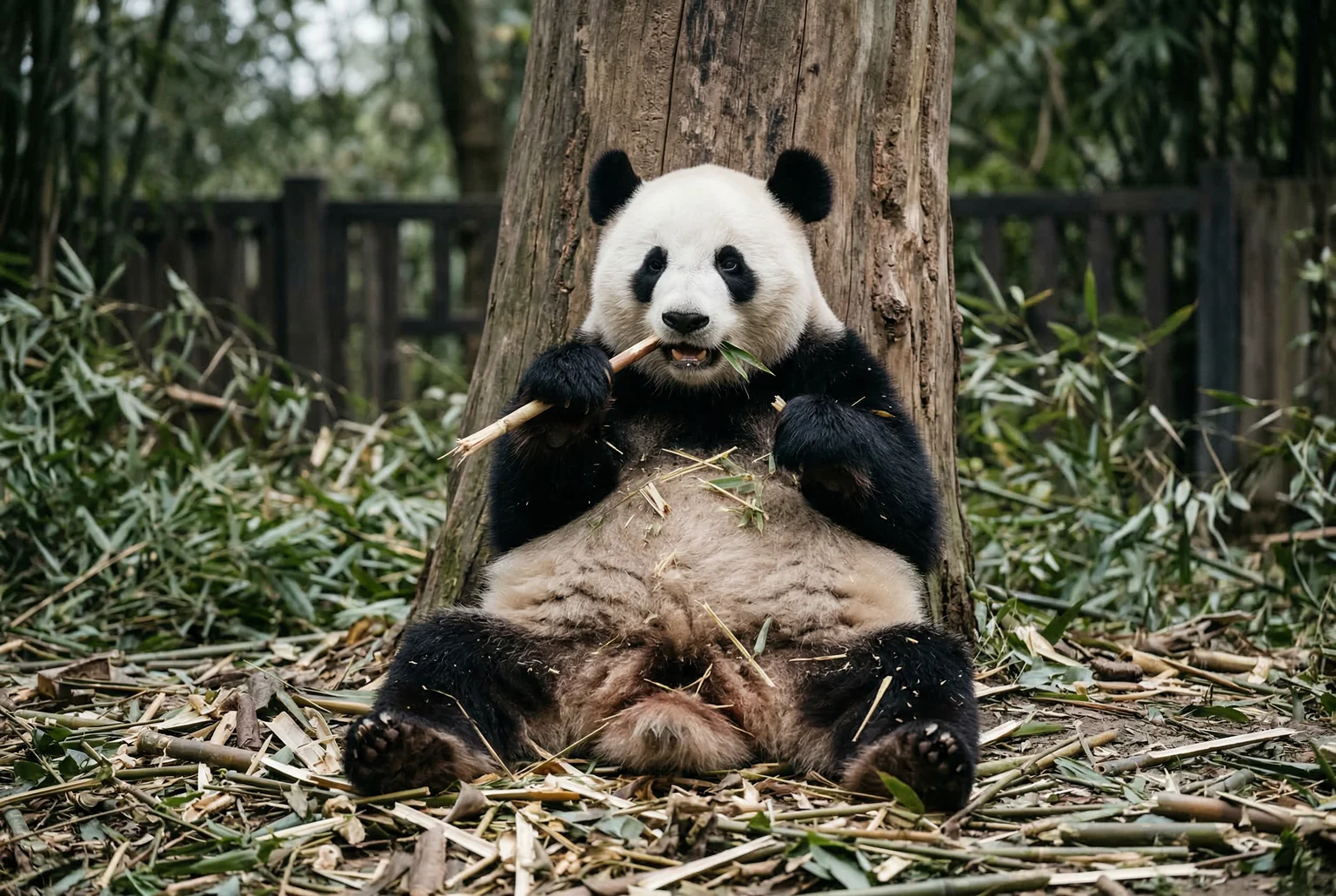
This animal — round, slow, apparently baffled by the concept of urgency — is also one of the most effective foreign policy instruments operated by the world’s second-largest economy. China has used giant pandas to reward allies, signal displeasure, and quietly threaten governments into diplomatic compliance. The panda has been sent as a gesture of goodwill to nations China wanted to flatter, and conspicuously NOT sent to nations China wanted to punish.
Meanwhile, the panda is eating bamboo and being useless.
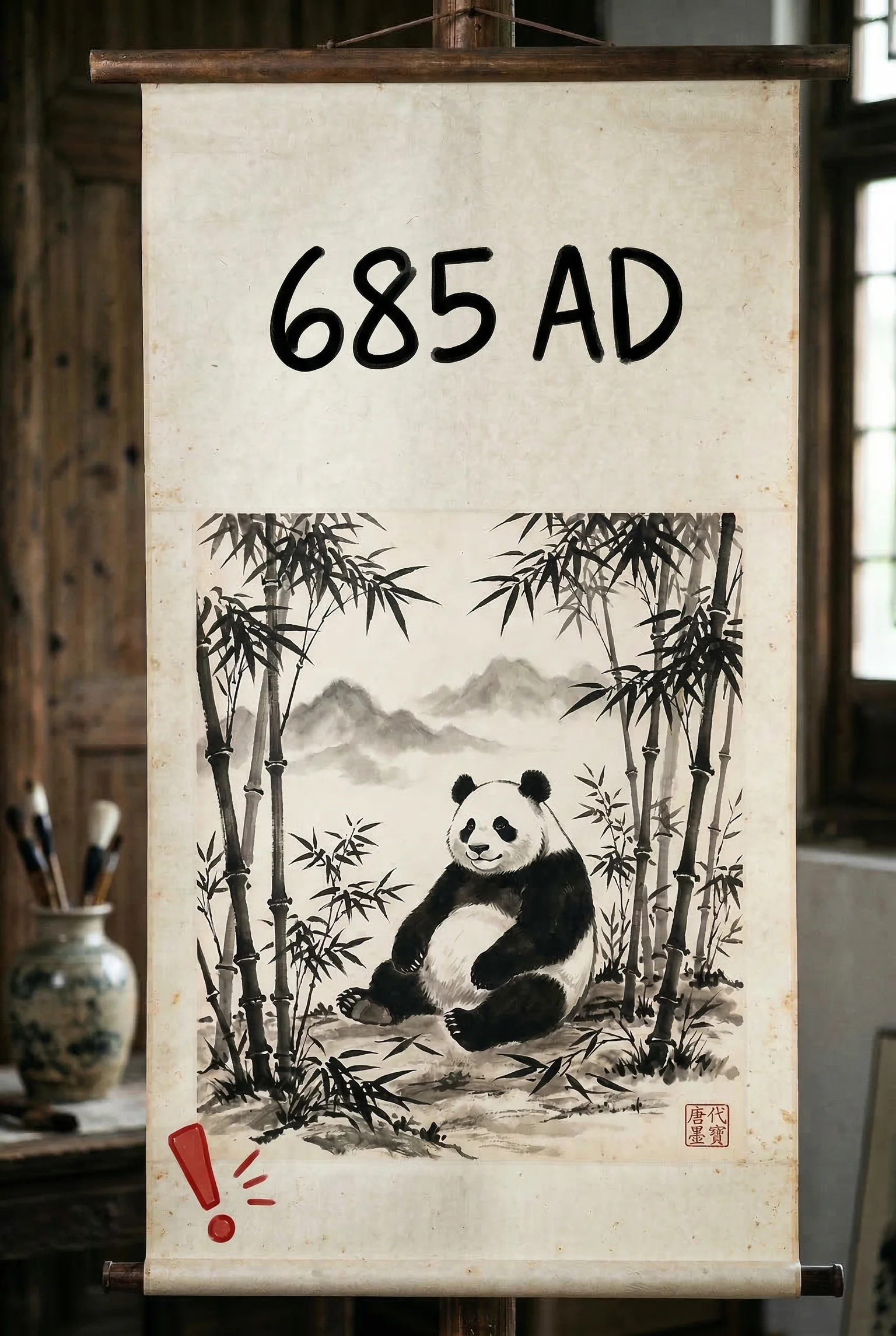
China has been doing this since 685 AD
This is not a recent scheme. China has been deploying bears as geopolitical favors for well over a thousand years, which either speaks to extraordinary strategic patience or to the fact that pandas have always been EXTREMELY good at their job.
In 685 AD, Empress Wu Zetian sent two “white bears” and 70 panda furs to Japan’s Emperor Tenmu. [23] Scholars have interpreted “white bears” as giant pandas, which means that the earliest documented act of panda diplomacy also involved sending the skins of 70 of them, a detail that suggests the 7th century had a somewhat different read on conservation optics.
Then nothing for about 1,287 years, until Richard Nixon flew to Beijing in February 1972 and changed everything. Premier Zhou Enlai gifted two giant pandas to the United States after First Lady Pat Nixon, visiting a zoo, admired them out loud. [15] [16] This is the origin story of modern panda diplomacy: a casual compliment that somehow resulted in a geopolitical transaction.
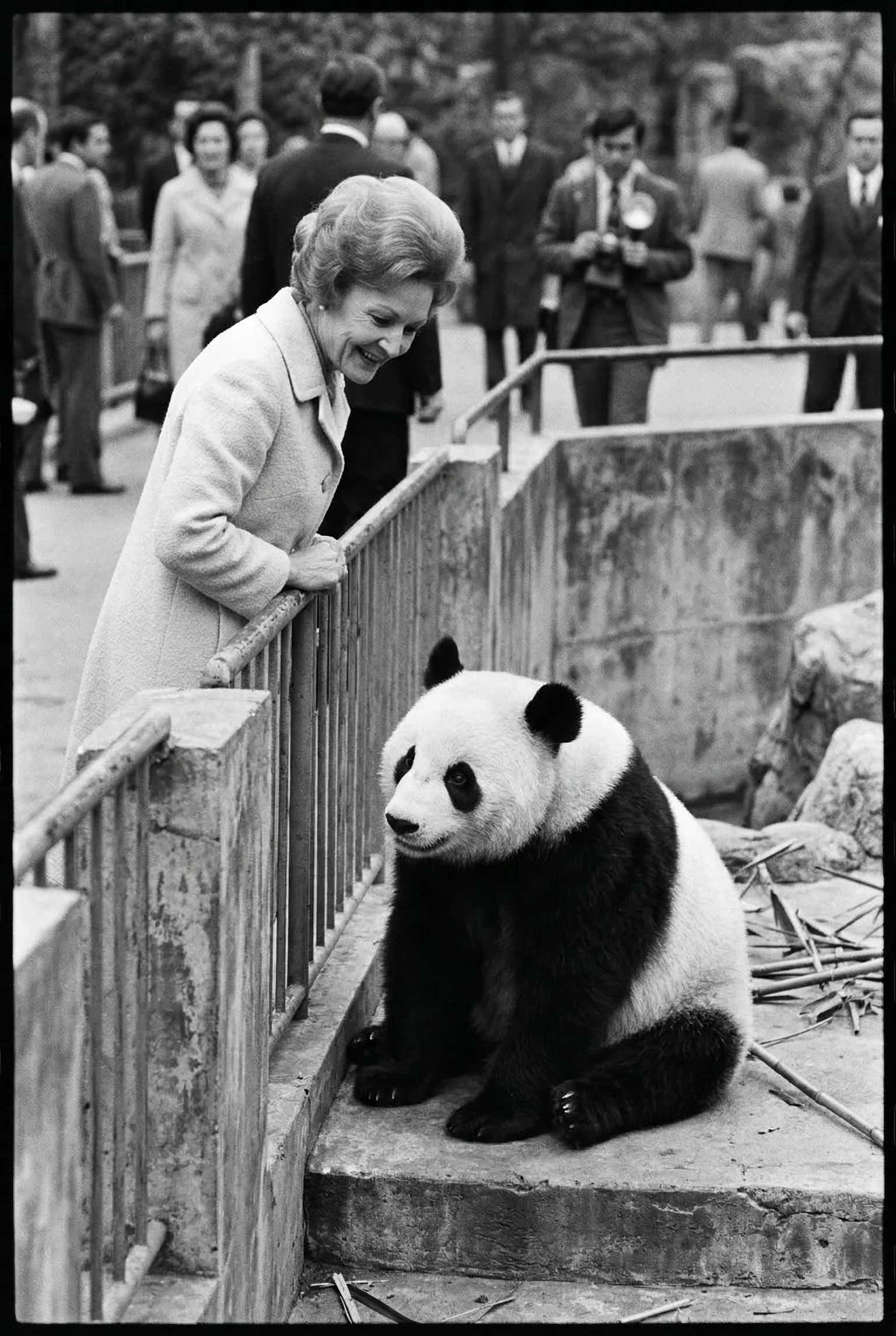
Ling-Ling and Hsing-Hsing arrived at Washington Dulles Airport on April 16, 1972. [17] About 20,000 people showed up for their first public day. [15] The United States reciprocated by sending musk oxen, named Milton and Matilda, which generated considerably less fanfare.
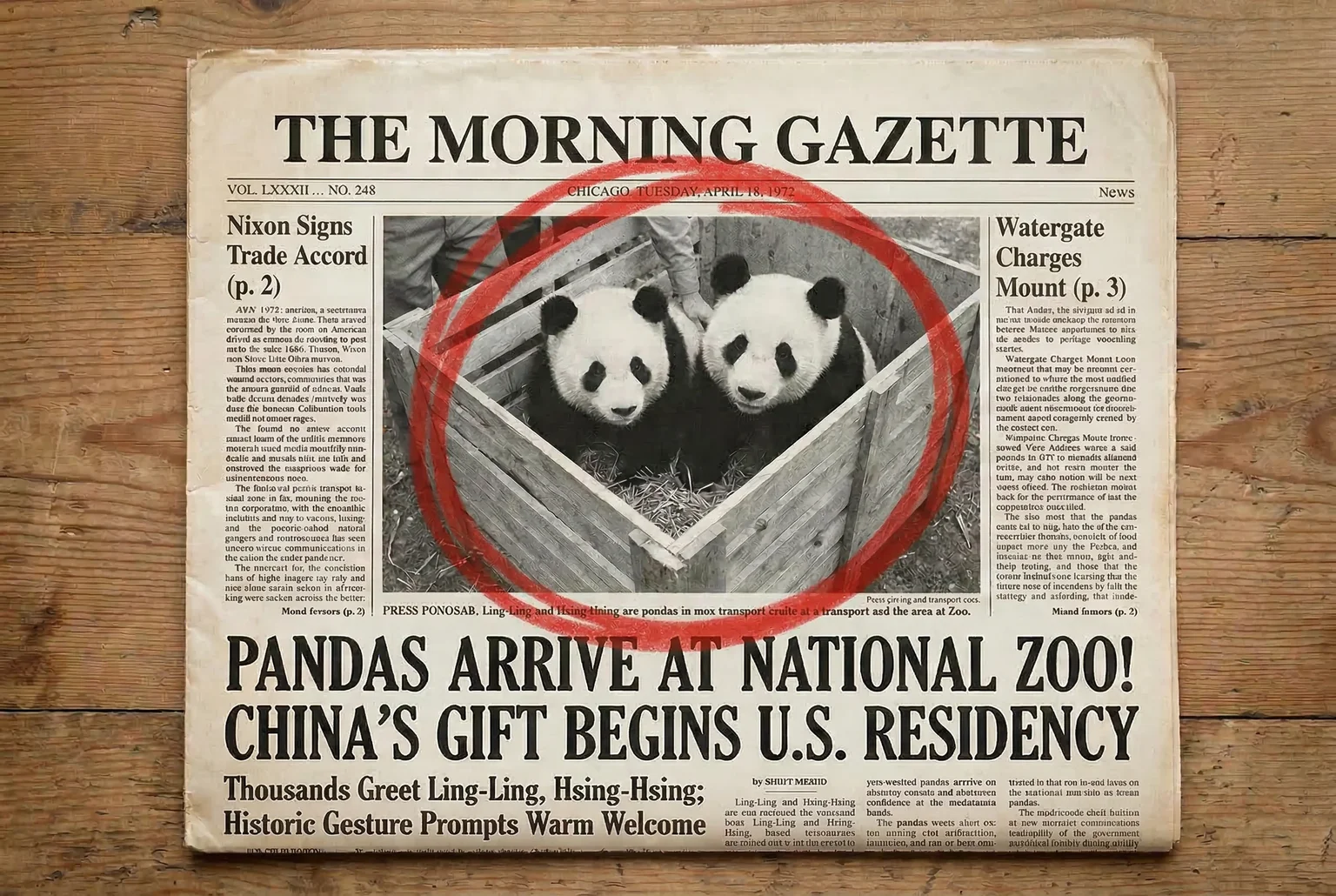
China noticed the attention. And in the 1980s, it quietly stopped GIVING pandas away and started leasing them instead. [28]
Turns out there’s a lease agreement
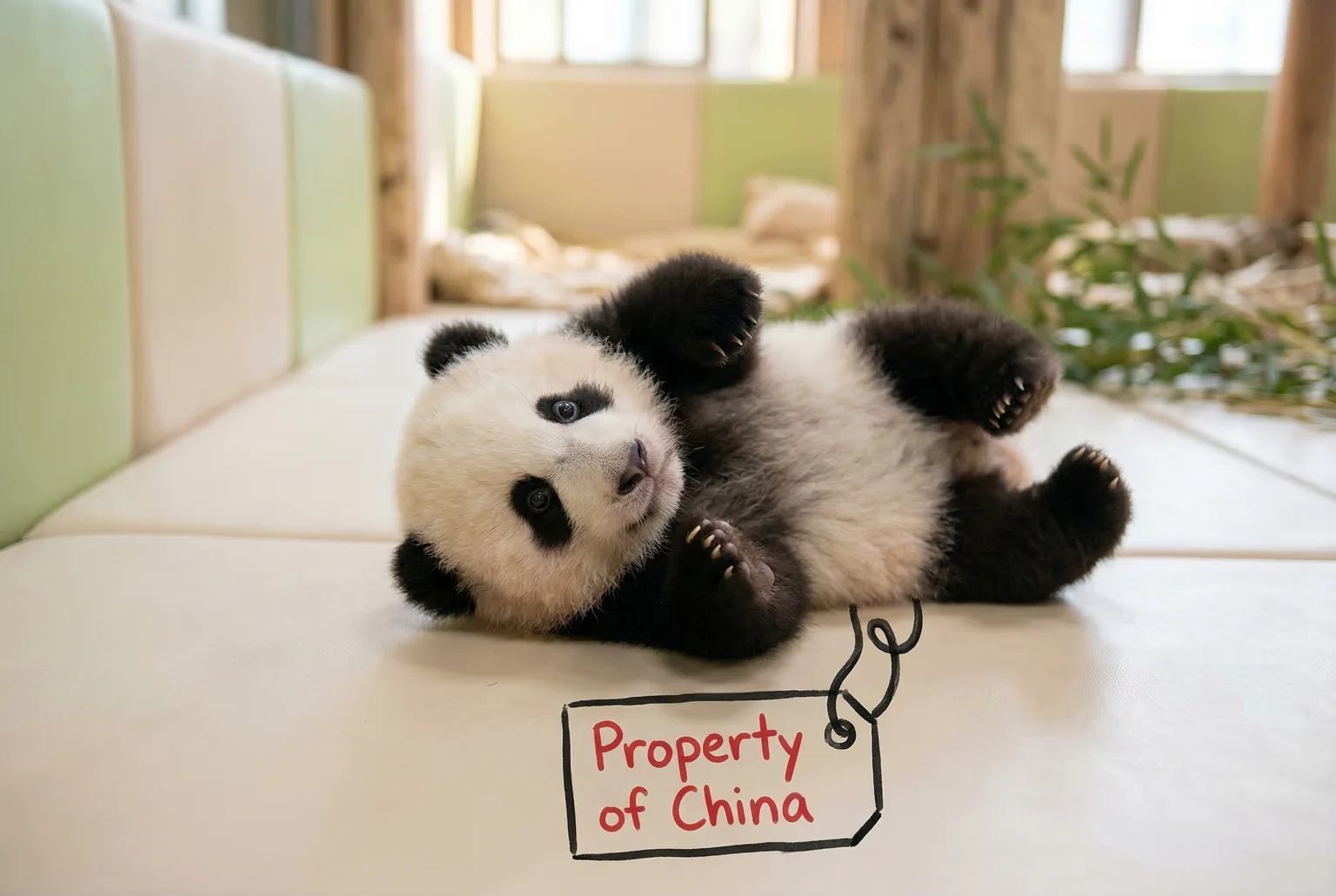
Here is something your zoo brochure will never tell you: that panda you are watching eat bamboo in what appears to be a state of complete spiritual contentment does not belong to the zoo. It does not belong to the country you are standing in. Under Chinese law, every giant panda on earth is the property of the People’s Republic of China, and the zoo hosting it is essentially a very expensive tenant. [28]
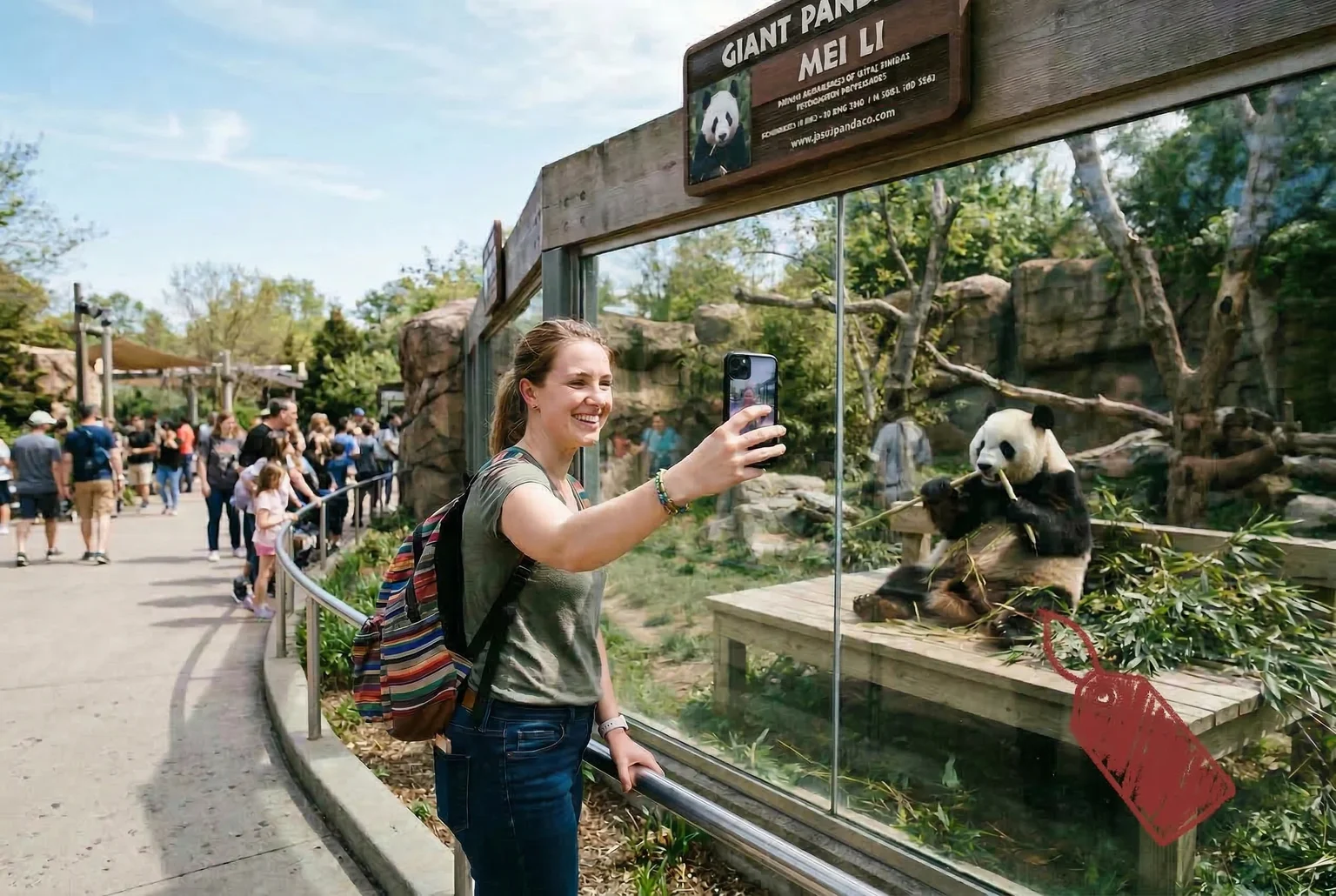
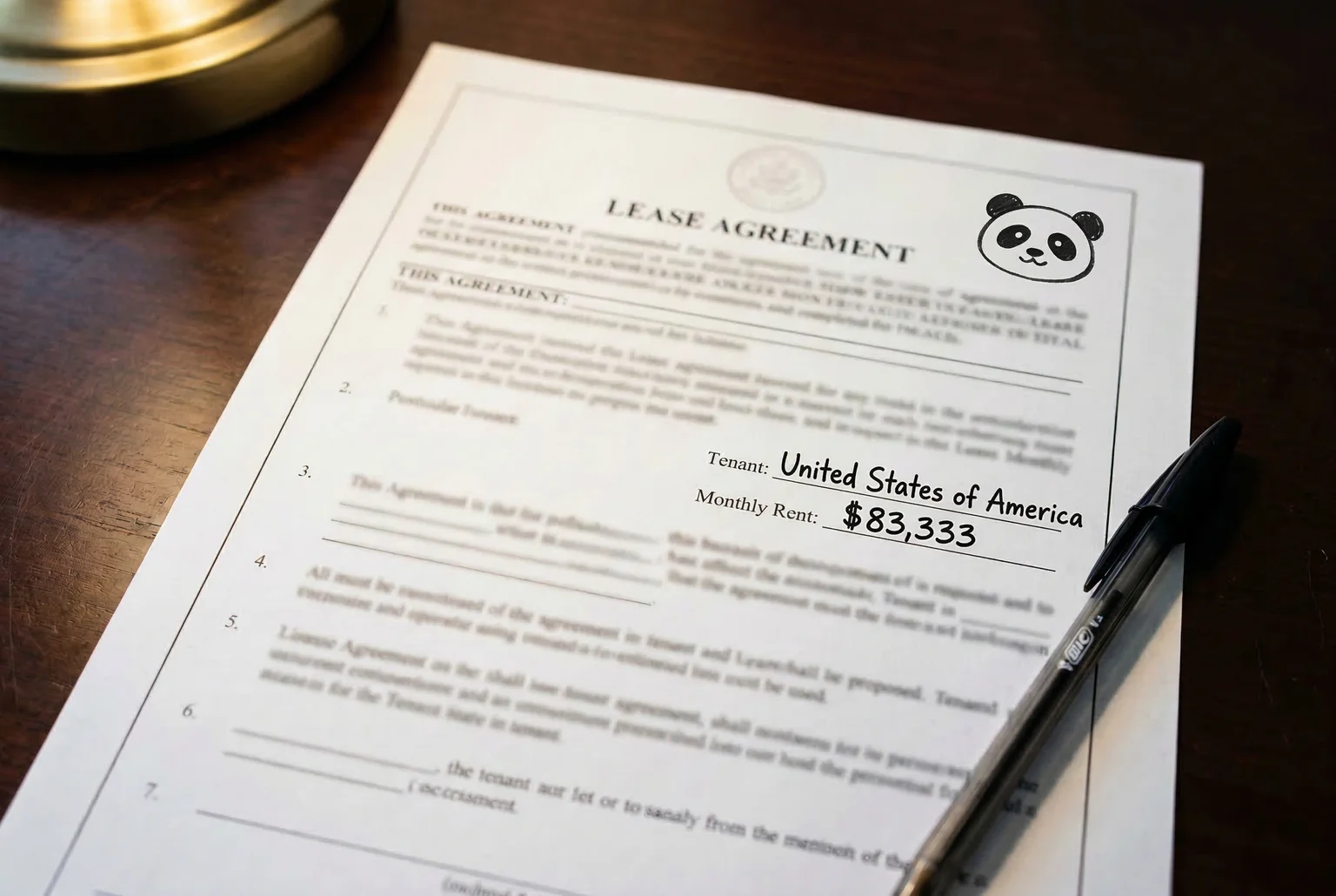
The standard arrangement is a 10-year loan at approximately $1 million per year per pair. [30] The National Zoological Park signed exactly this kind of deal in 2000 — $10 million over ten years, which works out to a dollar-per-second rate that would make most landlords weep with joy. Zoo Atlanta has reportedly contributed over $17 million to Chinese reserves and research over the course of its panda relationship. [29] China frames all of this as conservation funding, which is technically true and also EXTREMELY convenient.
Now for the clause that truly separates this from your average rental agreement. If a panda gives birth on foreign soil, the cub is automatically Chinese. Not dual-citizen. Not subject to local law. Chinese. Cubs are typically sent back to China around age four. [32] [33] Some reporting cites an additional fee of roughly $400,000 per cub born abroad. [41]
Should a panda die while on loan, social media commentary suggests the remains must be returned or incinerated according to Chinese protocols. Limiting research access in a way that seems, generously, like an oversight, and less generously, like one final clause in the world’s most passive-aggressive contract. [42]
Want to know if China likes you? Check the panda situation
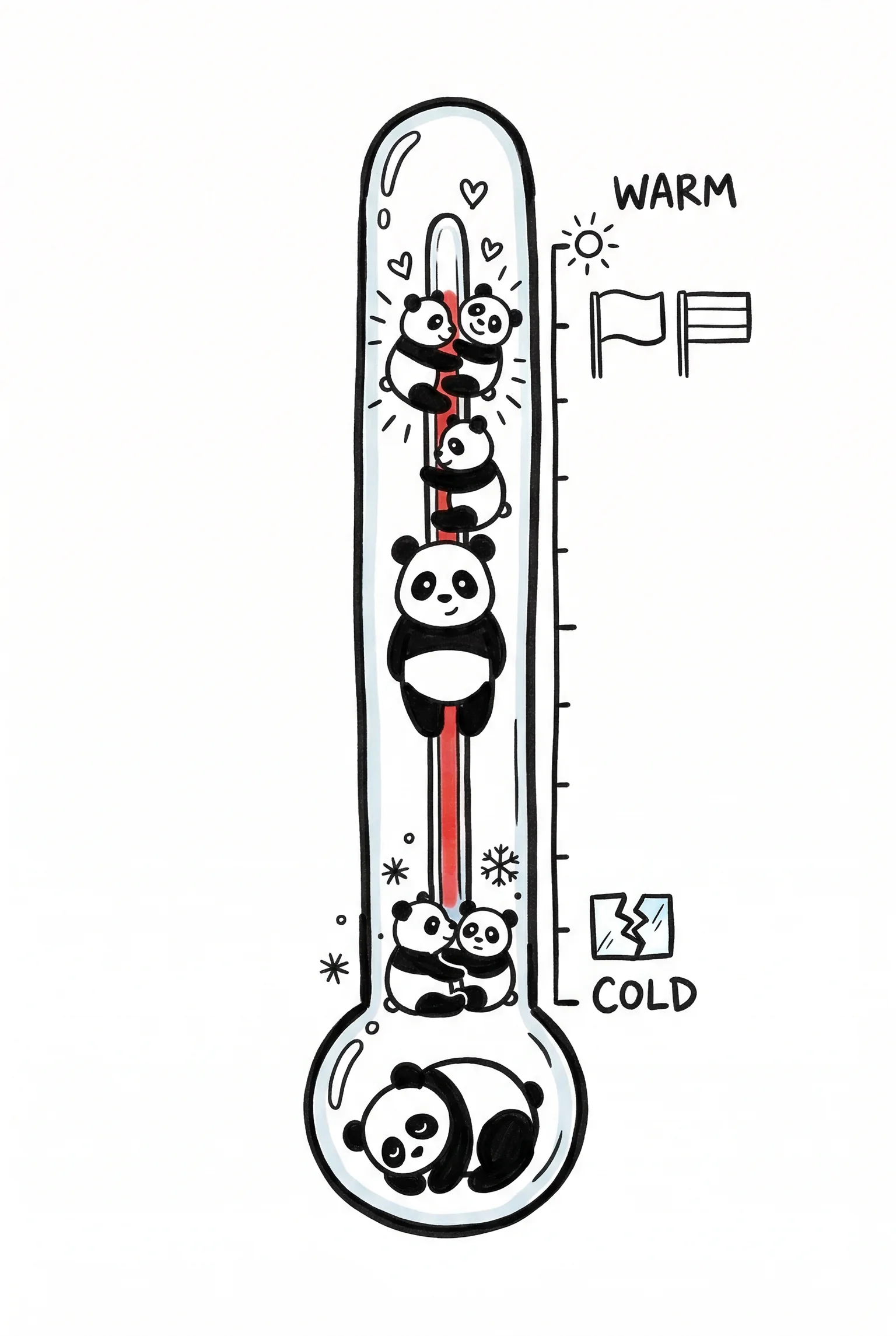
The loan terms alone would make any diplomat nervous. But the TRULY revealing part is the pattern of when pandas get sent, and when they get taken back.
When relations are warm, pandas flow. China sent pandas to Japan in 1972, the same year the two countries normalized relations. A pair arrived in the US shortly after Nixon’s visit. Edinburgh’s pandas landed in 2011, right as the UK and China were signing trade deals worth billions. The correlation is so consistent that tracking panda placements works almost as well as reading Foreign Ministry briefings, and is considerably more entertaining.
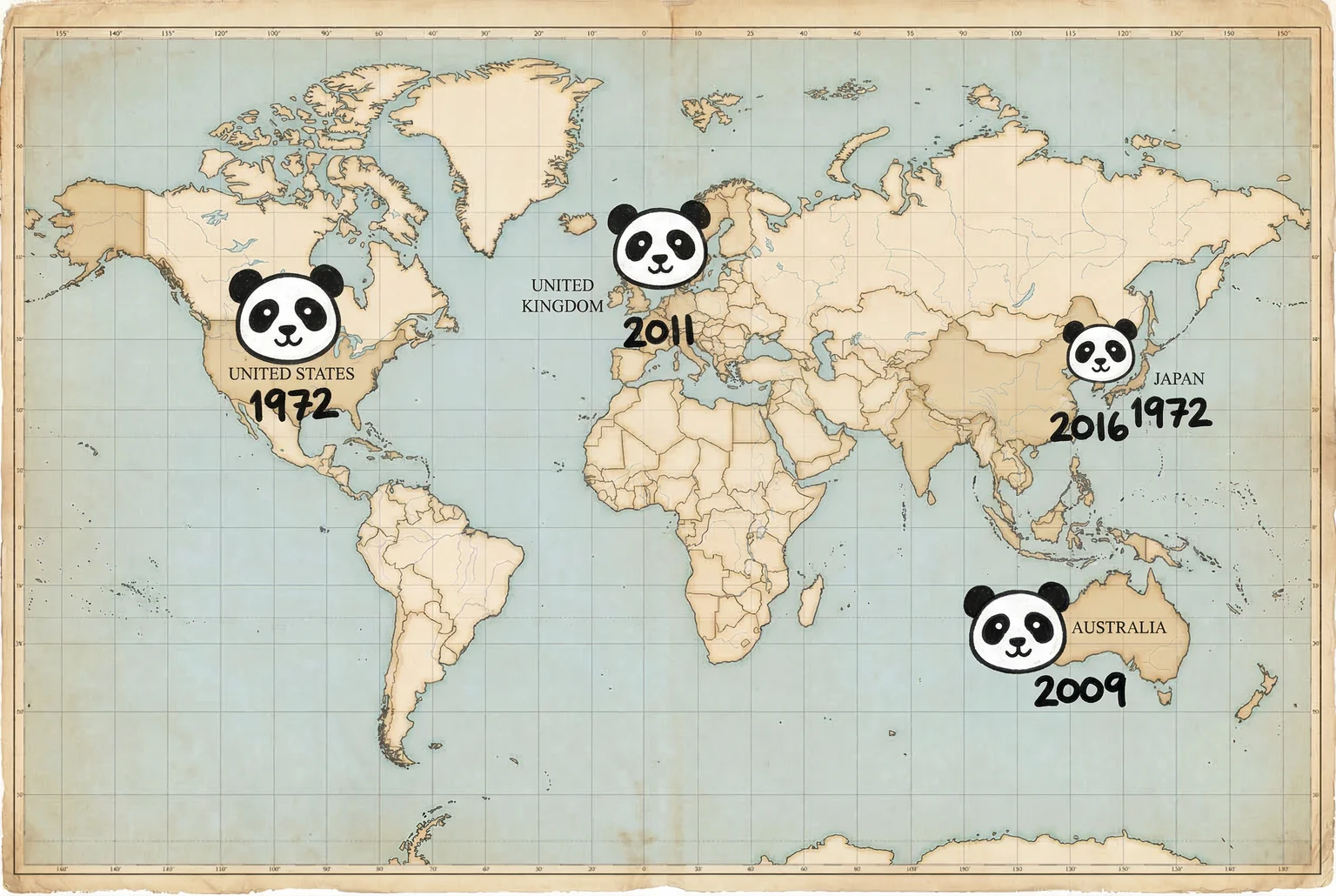
When relations cool, the pandas notice, or rather, the paperwork does. South Korea accepted a pair in 2016, roughly as a diplomatic gesture. Then Seoul agreed to host the American THAAD missile defense system. China was furious. The pandas did not come home outright, but new cooperative agreements stalled, and the warmth that delivered them evaporated with remarkable speed. [38]
Australia’s panda relationship developed a similar chill following the AUKUS security pact announcement in 2021. Japan has watched its panda situation fluctuate in rough parallel with tensions over the Senkaku Islands. After Tiananmen Square in 1989, the US saw its panda pipeline go cold for years. [38]
And then there is Taiwan. China has, on multiple occasions, offered Taiwan pandas, and then rescinded the offer the moment political conditions shifted. When Taiwan’s government refused to accept terms that implied it was a Chinese province rather than a sovereign state, the pandas were simply unavailable. Conservation reasons, Beijing noted. [38]

The pandas themselves remain entirely unaware that they are CCP tool.
The pandas are, of course, totally fine
When a panda gets recalled, no one ever says it’s because your government made a defense deal that Beijing disapproves of. That would be rude. Instead, there are HEALTH CONCERNS.
In March 2022, the Chinese Association of Zoological Gardens issued a statement about Memphis Zoo’s pandas LeLe and YaYa, citing malnutrition, parasite infections, and severe behavioral problems. Memphis Zoo publicly described the animals as “perfectly healthy.” [49]
When the National Zoo’s three pandas departed in late 2023, official statements cited conservation context and lease timing. Analysts noted that US-China diplomatic relations were, at that precise moment, not great. [45] [53] No one in an official capacity connected these facts.
This is the genius of the system. Every recall is documented. Every recall is medical, or logistical, or a milestone in international conservation cooperation. The political interpretation is left entirely to you, the reader, to construct. China just wanted to make sure the bear was okay. [57]
The diplomat who eats 84 pounds of food it cannot digest
Throughout all of this, the panda has been busy with other concerns. Specifically: chewing.
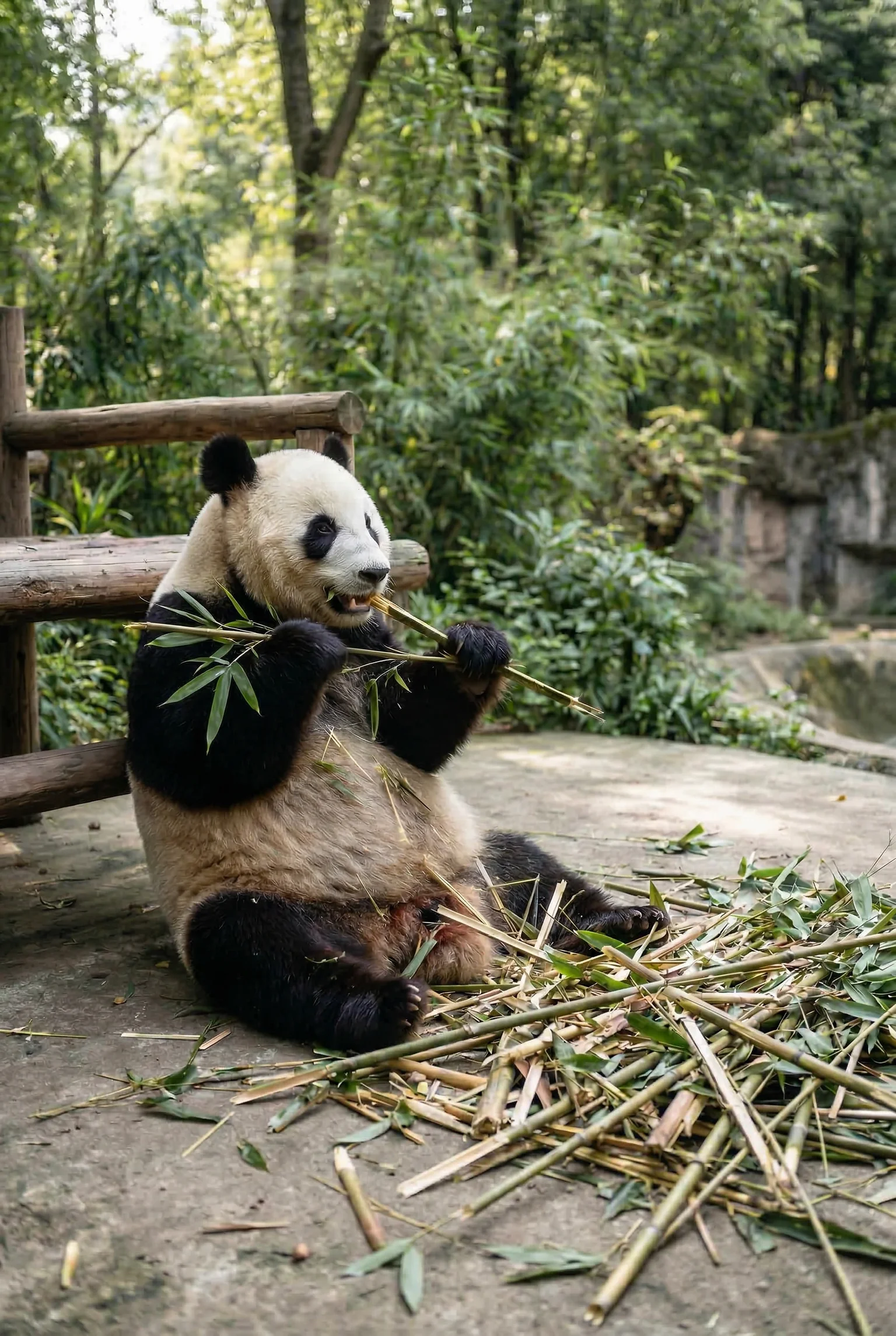
The giant panda is technically a carnivore. It has a carnivore’s digestive system, short and acidic, designed for meat. At some point in evolutionary history it switched to eating almost exclusively bamboo, which that digestive system processes at roughly 17% efficiency. [1] This means the panda must eat up to 84 pounds of bamboo per day just to extract enough nutrition to remain alive, which leaves approximately zero hours for geopolitical awareness.
It is also fertile for about 36 hours per year. Not per month. Per YEAR. The sex drive is, by all scientific accounts, minimal. Captive breeding programs have resorted to showing male pandas videos of other pandas mating, which is exactly as dignified as it sounds. The species exists at the edge of biological viability and has done basically nothing to help itself.
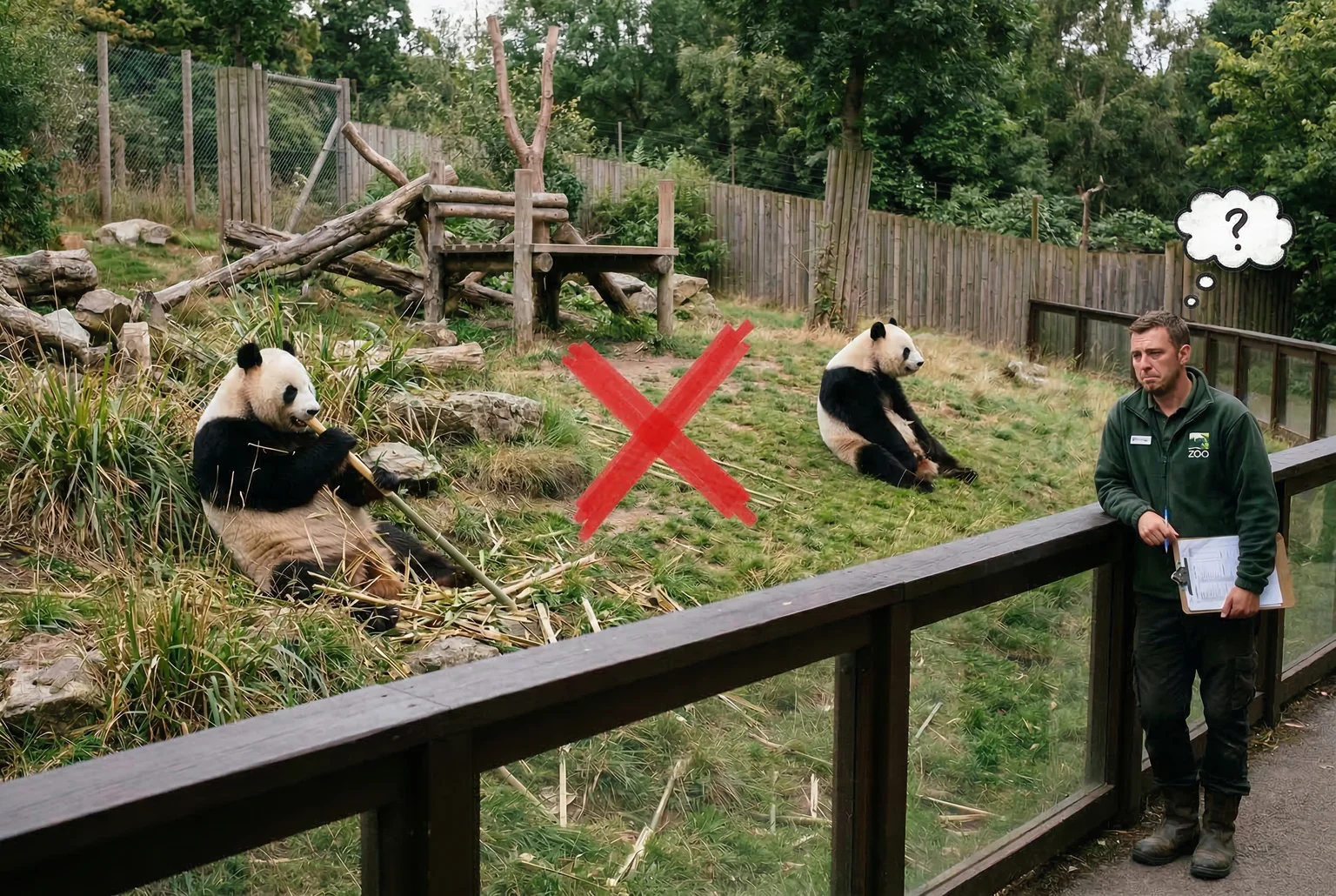
What has saved the giant panda is not adaptation, or resilience, or any property the panda itself possesses. It is the fact that it has a round face and monochrome coloring that humans find unbearably endearing.
The panda did not choose to be a diplomat. The panda did not choose anything. The panda is sitting on the ground eating its 47th pound of bamboo and has no notes.
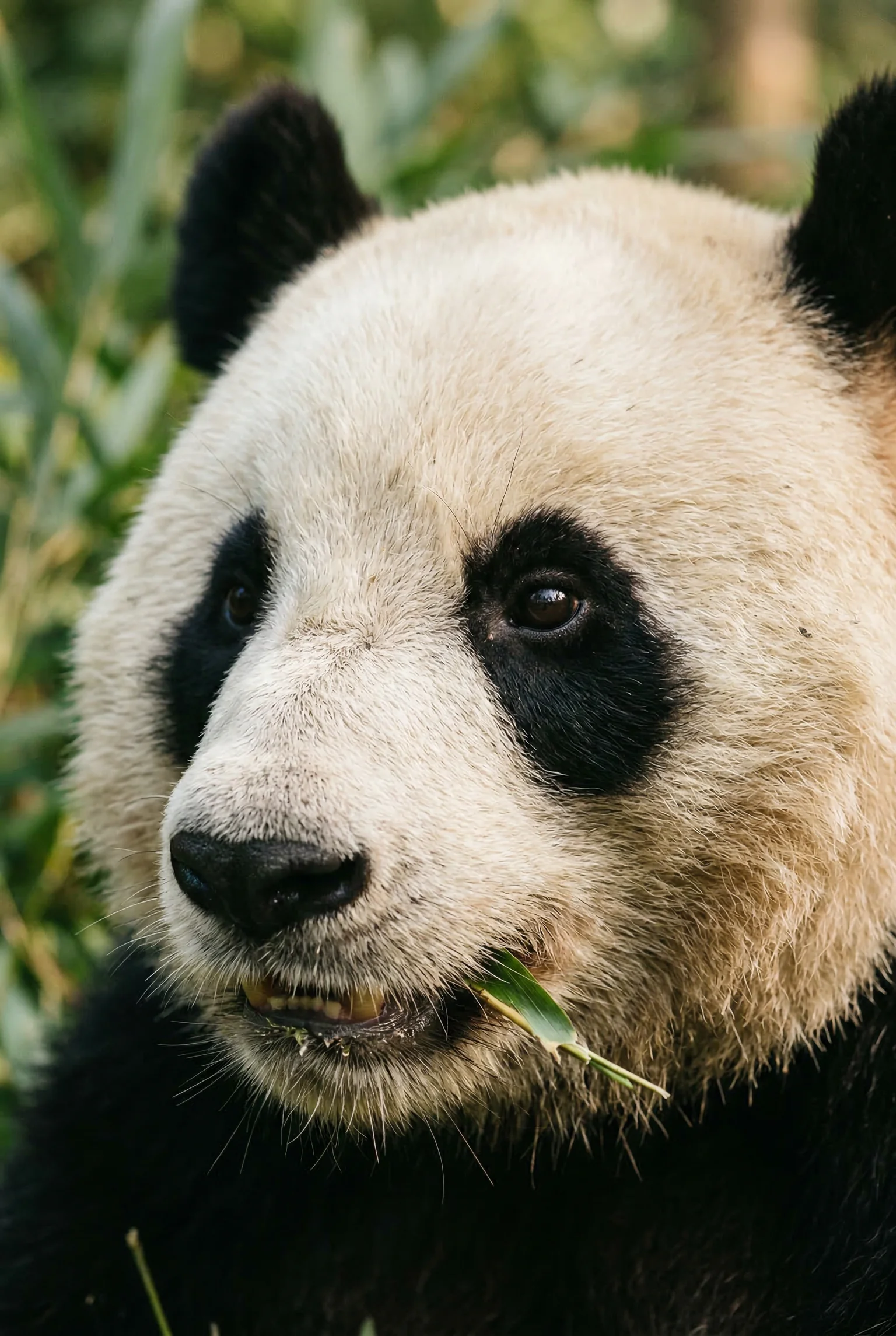
The real foreign policy genius is that it’s also adorable
Joseph Nye coined the term soft power in 1990 to describe winning outcomes through attraction rather than coercion. He probably did not have a 200-pound bear falling off a playground structure in mind. And yet.

The panda only exists because humans found it too cute to let go extinct. China was simply the first government to notice that this was ALSO a foreign policy asset, patent it, and lease it back to the world at $1 million per year. [38]

Every zoo that displays a panda is, functionally, a Chinese diplomatic outpost with better snacks.
Think about that the next time you see one of these black-and-white idiots at the zoo.
Sources
[1] Giant Panda Diet Factsheet — https://ielc.libguides.com/sdzg/factsheets/giantpanda/diet
[2] Giant Pandas - EBSCO Research Starters — https://www.ebsco.com/research-starters/zoology/giant-pandas
[3] Ailuropoda melanoleuca (Giant Panda) — https://www.bearbiology.org/the-eight-bear-species/ailuropoda-melanoleuca-giant-panda/
[4] Giant Panda Taxonomy Factsheet — https://ielc.libguides.com/sdzg/factsheets/giantpanda/taxonomy
[5] Giant panda — Wikipedia — https://en.wikipedia.org/wiki/Giant_panda
[6] Giant panda | Britannica — https://www.britannica.com/animal/giant-panda
[7] Giant Panda — U.S. Fish & Wildlife Service — https://www.fws.gov/species/giant-panda-ailuropoda-melanoleuca
[8] Giant Panda — Smithsonian’s National Zoo — https://nationalzoo.si.edu/animals/giant-panda
[9] YouTube video (u-9bWG3TmL8) — https://www.youtube.com/watch?v=u-9bWG3TmL8
[10] YouTube video (O5f-4h7L5ts) — https://www.youtube.com/watch?v=O5f-4h7L5ts
[11] YouTube video (90VyjRlTbvM) — https://www.youtube.com/watch?v=90VyjRlTbvM
[12] Fascinating Facts: Pandas — https://www.wwf.org.uk/learn/fascinating-facts/pandas
[13] X post 1961297161930346562 (panda mocking examples) — https://x.com/i/status/1961297161930346562
[14] X post 980339477930487809 (panda falling clip) — https://x.com/i/status/980339477930487809
[15] Pandas / Pandaversary (National Archives news/topic) — https://www.archives.gov/news/topics/pandaversary
[16] Ling-Ling and Hsing-Hsing — Wikipedia — https://en.wikipedia.org/wiki/Ling-Ling_and_Hsing-Hsing
[17] History of Giant Pandas at the National Zoo — https://nationalzoo.si.edu/animals/history-giant-pandas-zoo
[18] Pat Nixon Welcoming Pandas (DocsTeach / National Archives educational resource) — https://docsteach.org/document/pat-nixon-welcoming-pandas/
[19] Local news feature on how the U.S. got the giant pandas (WSET) — https://wset.com/amazing-america/america-celebrates/a-dinner-conversation-and-one-woman-using-her-voice-how-we-got-the-giant-pandas-richard-nixon-pat-brandie-smith-bao-li-qing-bao
[20] Don’t Worry, Mr. Nixon — National Zoo’s Pandas Figured Out How to Have Sex (Smithsonian Magazine) — https://www.smithsonianmag.com/smart-news/dont-worry-mr-nixon-national-zoos-pandas-figured-out-how-have-sex-180952180/
[21] Timeline: Giant Panda Cubs at the National Zoo (SI factsheet) — https://www.si.edu/newsdesk/factsheets/timeline-giant-panda-cubs-national-zoo
[22] Smithsonian Institution Archives collection record (panda-related materials) — https://siarchives.si.edu/collections/siris_sic_1003
[23] Panda Diplomacy (LTL Beihai blog/article) — https://ltl-beihai.com/panda-diplomacy/
[24] Panda Diplomacy — The World’s Cutest Ambassadors (Artefact Magazine) — https://www.artefactmagazine.com/2024/01/30/panda-diplomacy-the-worlds-cutest-ambassadors/
[25] Cute, Cuddly and Politically Convincing — History of China’s ‘Brand Ambassador’ Panda (OpenCanada) — https://opencanada.org/cute-cuddly-and-politically-convincing-history-chinas-favourite-brand-ambassador-panda/
[26] Panda diplomacy (Korea JoongAng Daily) — https://koreajoongangdaily.joins.com/2016/02/23/fountain/Panda-diplomacy/3015425.html
[27] How has China’s panda diplomacy evolved — and where are its stars now? (South China Morning Post) — https://www.scmp.com/news/china/diplomacy/article/3222175/how-has-chinas-panda-diplomacy-evolved-and-where-are-its-stars-now
[28] CRS report on China’s ‘Panda Diplomacy’ (IF12122) — https://www.everycrsreport.com/reports/IF12122.epub
[29] Giant Panda Project — Zoo Atlanta — https://zooatlanta.org/project/giant-panda-2/
[30] National Zoological Park records (Smithsonian Institution Archives) — panda loan record (2000) — https://siarchives.si.edu/collections/siris_sic_2360
[31] Panda diplomacy: biggest winner in China’s loan program is the pandas themselves — https://www.columbian.com/news/2024/jul/20/panda-diplomacy-biggest-winner-in-chinas-loan-program-is-the-pandas-themselves/
[32] Singapore’s panda Le Le to return to China — https://www.channelnewsasia.com/singapore/panda-le-le-return-china-kai-kai-jia-jia-river-wonders-5602281
[33] Panda diplomacy and overseas-born cubs (analysis) — https://www.nippon.com/en/in-depth/d01151/
[34] Panda diplomacy: future of Chinese loans in doubt as US prepares farewell to Mei Xiang, Tian Tian and Xiao Qi Ji — https://www.scmp.com/news/china/science/article/3236541/panda-diplomacy-future-chinese-loans-doubt-us-prepares-farewell-mei-xiang-tian-tian-and-xiao-qi-ji
[35] Coverage referencing panda return policies (international reporting) — https://yle.fi/a/74-20113880
[36] China makes cute use of panda loans (analysis) — University of Oxford — https://www.ox.ac.uk/news/2013-09-25-china-makes-cute-use-panda-loans
[37] Science article referencing panda conservation and international loans — https://www.science.org/doi/10.1126/science.aba3948
[38] Panda diplomacy — Wikipedia — https://en.wikipedia.org/wiki/Panda_diplomacy
[39] Panda bond / related rules (NAFMII reference) — https://www.nafmii.org.cn/englishnew/overseasparticipation/pandabond/selfregulatoryrulesandguidelines/
[40] The potential role of panda bonds in development finance — https://www.bu.edu/gdp/2025/02/11/the-potential-role-of-panda-bonds-in-development-finance/
[41] X post summarizing $1M/year and critical commentary — https://x.com/i/status/1945774398318989439
[42] X post alleging restrictions on deceased pandas’ remains — https://x.com/i/status/1984741217155105125
[43] The Panda Bond Market and perspectives (ICMA PDF) — https://www.icmagroup.org/assets/documents/About-ICMA/APAC/The-Panda-Bond-Market-and-Perspectives-of-Foreign-Issuers---English---171017.pdf
[44] Memphis Zoo pandas joint statement — https://www.idausa.org/campaign/wild-animals-and-habitats/latest-news/memphis-zoo-pandas-joint-statement/
[45] DC pandas return — Ask a Professor? — https://www.georgetown.edu/news/dc-pandas-return-ask-a-professor/
[46] Pandas leaving the National Zoo — https://wamu.org/story/23/11/07/pandas-leaving-national-zoo/
[47] WWF statement on China’s announcement that giant pandas are no longer endangered — https://www.worldwildlife.org/news/press-releases/wwf-statement-on-chinas-announcement-that-giant-pandas-are-no-longer-endangered/
[48] Committee of 100 comments on the symbolism of the giant pandas returning to the National Zoo — https://www.committee100.org/media-center/committee-of-100-comments-on-the-symbolism-of-the-giant-pandas-returning-to-the-national-zoo/
[49] Media release — Pressure mounts to return suffering pandas to China — https://www.idausa.org/campaign/wild-animals-and-habitats/latest-news/media-release-pressure-mounts-to-return-suffering-pandas-to-china/
[50] Panda Voices responds to Memphis Zoo’s statement — https://www.pandavoices.org/post/panda-voices-responds-to-memphiszoo-s-statement
[51] Article on Ya Ya panda, USA-China and health (Mothership) — https://mothership.sg/2026/02/ya-ya-panda-usa-china-health/
[52] Panda diplomats: Can conservation save global cooperation? — https://uscgpi.com/2026/02/03/panda-diplomats-can-conservation-save-global-cooperation/
[53] China’s national treasures: What’s next for panda diplomacy? — https://medillonthehill.medill.northwestern.edu/2024/10/chinas-national-treasures-whats-next-for-panda-diplomacy/
[54] China’s panda diplomacy: Cute politics, fuzzy results — https://www.lowyinstitute.org/the-interpreter/china-s-panda-diplomacy-cute-politics-fuzzy-results
[55] China’s panda diplomacy is not breeding conservation — https://thediplomat.com/2023/04/chinas-panda-diplomacy-is-not-breeding-conservation/
[56] Journal article on panda diplomacy and politics (2025) — https://www.tandfonline.com/doi/full/10.1080/09512748.2025.2537424
[57] How China’s pandas became its most valuable diplomats and its vulnerable children — https://www.ussc.edu.au/how-china-s-pandas-became-its-most-valuable-diplomats-and-its-vulnerable-children
[58] This Is How China Owns All the Giant Pandas in the World — https://greatwall.co.id/article/this-is-how-china-owns-all-the-giant-pandas-in-the-world
[59] 중국의 판다 소유권 정착 (Namu Wiki page) — https://en.namu.wiki/w/%EC%A4%91%EA%B5%AD%EC%9D%98%20%ED%8C%90%EB%8B%A4%20%EC%86%8C%EC%9C%A0%EA%B6%8C%20%EC%A0%95%EC%B1%85
[60] YouTube video (unnamed in section) on panda ownership/leases — https://www.youtube.com/watch?v=s_2l91SGDuU
[61] Soft power — Wikipedia — https://en.wikipedia.org/wiki/Soft_power
[62] Scholarly article on soft power (JSTOR record) — https://www.jstor.org/stable/25097996
[63] Joseph Nye on Soft Power (E-International Relations) — https://www.e-ir.info/2013/03/08/joseph-nye-on-soft-power/
[64] Soft power / related discussion (IA-Forum) — https://www.ia-forum.org/Content/ViewInternal_Document.cfm?contenttype_id=5&ContentID=8393
[65] Joseph Nye — Soft Power (PDF, Wilson Center / journal reproduction) — https://www.wilsoncenter.org/sites/default/files/media/documents/page/joseph_nye_soft_power_journal.pdf
[66] Soft Power: The Means to Success in World Politics (resource page) — https://www.diplomacy.edu/resource/soft-power-the-means-to-success-in-world-politics/
[67] What is Soft Power? (Council on Foreign Relations educational page) — https://education.cfr.org/learn/reading/what-soft-power
[68] Soft Power and Public Diplomacy Revisited (Harvard Kennedy School page) — https://www.hks.harvard.edu/publications/soft-power-and-public-diplomacy-revisited
[69] Mohamad Zreik — Panda Diplomacy (2022 PDF) — https://journal.centruldedic.ro/wp-content/uploads/2022/08/Mohamad-ZREIK-2022.pdf
[70] Thesis: Panda Diplomacy (Aalborg University thesis PDF) — https://projekter.aau.dk/projekter/files/333641825/Thesis_Panda_Diplomacy_Final.pdf
[71] Diplomats and refugees: Panda diplomacy, soft cuddly power and the new trajectory in panda conservation (Cambridge Core) — https://cambridge.org/core/journals/environmental-practice/article/environmental-reviews-and-case-studies-diplomats-and-refugees-panda-diplomacy-soft-cuddly-power-and-the-new-trajectory-in-panda-conservation/A23238335C47C1717417060B7AAB05AF
If you read this far, you'll like what's next.
One essay a month, roughly. No noise, no sponsored content, no threads.